


Still Haven’t Planned Your Safari? Here’s Why November Is the Time to Explore Tipeshwar
Still Haven’t Planned Your Safari? Here’s Why November Is the Time to Explore Tipeshwar
Remember that safari trip you were supposed to take this year?
Someone suggested it months ago. You looked up a few wildlife destinations, checked a couple of photographs and probably discussed dates in the group chat.
But somehow, the trip never happened.
If it’s still on your list, November might be a good time to do something about it. The safari season is underway in Maharashtra, and Tipeshwar is worth considering if you’re looking for a wildlife break.
Unlike some of the bigger names in Maharashtra’s wildlife tourism circuit, Tipeshwar doesn’t always appear at the top of people’s travel plans. That doesn’t make it any less interesting.
In fact, there’s plenty here for someone who enjoys forests, wildlife and being away from the city for a few days.
Why Plan a Tipeshwar Safari in November?
Tipeshwar Wildlife Sanctuary is located in the Yavatmal district of Maharashtra, within the Vidarbha region.
The sanctuary generally reopens for tourism after the monsoon, and October to February is considered a favourable period for visiting.
By November, the forest is accessible for safaris under the normal operating calendar, and the weather is usually more comfortable than during the hotter months.
That’s useful if you’re planning to spend several hours in an open safari vehicle.
But there’s another reason to plan early.
Safari entry is regulated by the forest department. There are limits on the number of vehicles allowed, and bookings depend on permit availability.
You may have flexibility with your hotel dates, but the same isn’t always true of safari slots.
If you’re hoping to travel over a weekend, it’s worth checking the available permits before finalising everything else.
The last thing you want is to reach the destination and discover that your preferred safari isn’t available.
What Can You Actually See in Tipeshwar?
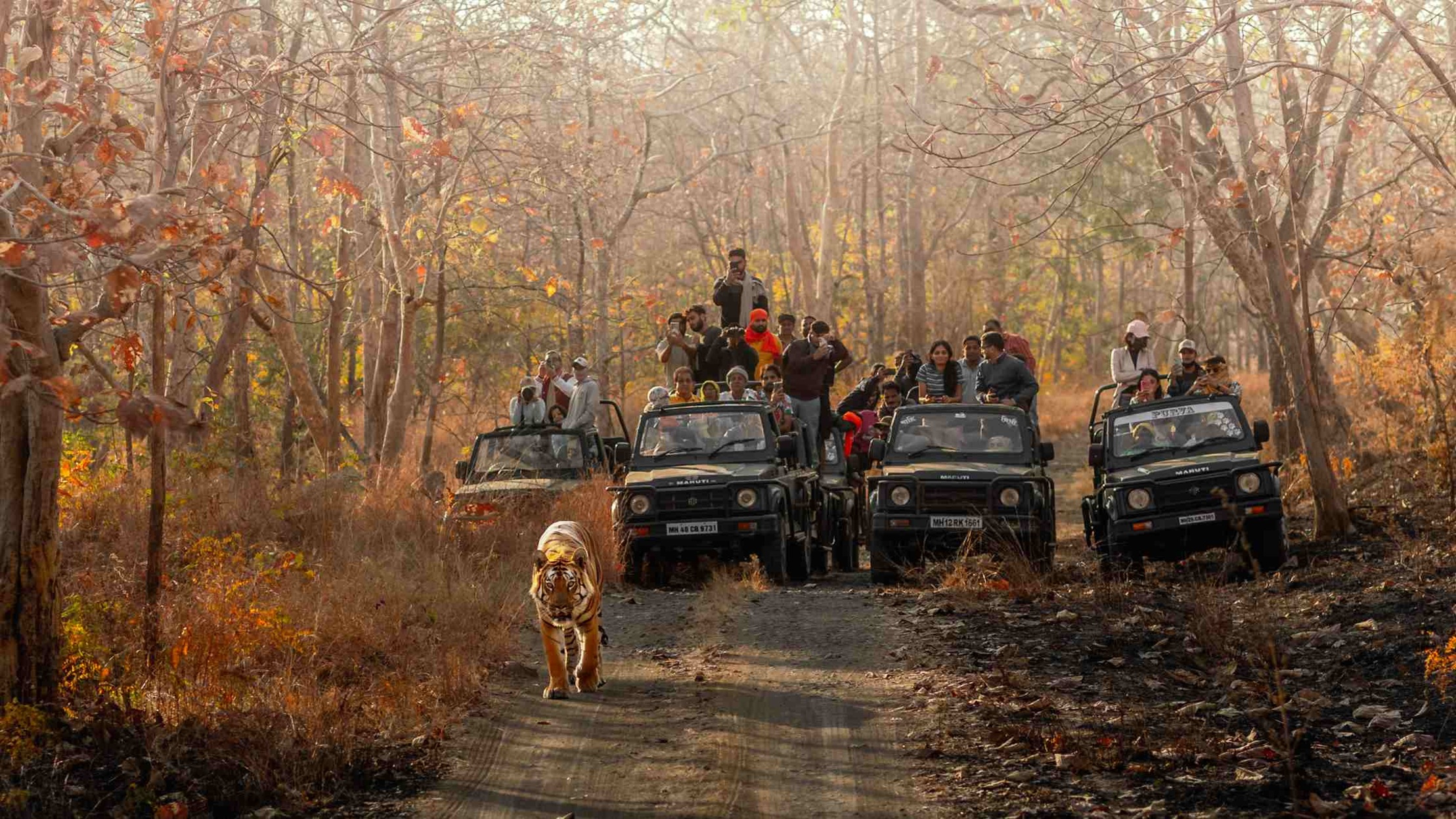
Tipeshwar is known for its tiger population, but it’s important not to approach the forest expecting a guaranteed sighting.
Tigers are wild animals. They move freely, and there’s no way to predict exactly where one will be during your safari.
The sanctuary also supports leopards, sloth bears, spotted deer, sambar, nilgai, wild boar and several bird species.
Even without a tiger sighting, there’s plenty to observe.
You might see deer feeding near a clearing, birds moving between the trees or tracks that suggest an animal passed through earlier.
Guides often pick up on details that most visitors would miss.
A sudden alarm call, a movement in the undergrowth or fresh pugmarks can change the atmosphere inside a safari vehicle very quickly.
Everyone starts looking in the same direction.
Sometimes that leads to a memorable sighting. Sometimes the animal remains hidden.
That’s simply part of the experience.
A Forest That Deserves More Attention
Spread across approximately 148 square kilometres, Tipeshwar Wildlife Sanctuary has a landscape of dry deciduous forest, hills and seasonal water sources.
Teak trees are common here, along with other vegetation typical of this part of Maharashtra.
The forest looks different depending on the season and the time of day.
Morning drives give visitors an opportunity to watch birds and animals becoming active, while afternoon safaris offer another chance to explore the habitat.
For photographers, there’s plenty to work with beyond large mammals.
Tree patterns, changing light, birds and the surrounding countryside can all make interesting subjects.
You don’t necessarily need expensive equipment, either. Binoculars and a little patience can be just as useful.
A Few Things to Sort Out Before You Travel
If this is your first wildlife safari, start with the practical details.
Tipeshwar has designated safari entry points, including Sunna, Mathani and Kodori. Your entry gate matters because it determines where you need to report for the drive.
The sanctuary is normally closed for safaris on Mondays, according to Maharashtra Tourism. Rules and schedules can change, so always check the current arrangements.
Carry the identification required for your booking and arrive at the gate within the reporting time specified.
Neutral-coloured clothing, comfortable footwear, drinking water and a light jacket for cooler mornings are sensible things to pack.
And remember, don’t feed wildlife or make noise to attract an animal’s attention.
The forest is their home. We’re only visiting.
Explore a Little More of Vidarbha
Tipeshwar also gives you an opportunity to see a different side of Maharashtra.
Yavatmal is an important agricultural region, and cotton farming is part of the local landscape.
If you have an afternoon free, exploring the surrounding countryside can add something to your trip.
The region is also known for Saoji cuisine, famous for its strong spice blends and rich gravies.
For anyone who enjoys regional food, it’s worth finding out which local dishes are available during the stay.
Stay Close to the Safari Action
Sterling Tipeshwar is located near the sanctuary’s Sunna Gate, making it a convenient option for early-morning safaris.
The resort offers villas and safari tents, along with open spaces and nature-led activities.
One interesting feature is Adavi, its private forest garden, where fruit-bearing trees attract local birds.
The resort also offers Sterling Safari Assistance, helping guests with permit guidance, gate information and vehicle coordination. Confirm availability before making travel arrangements.
So, if that safari trip has been sitting in the group chat for months, perhaps this is the time to bring it up again.
Pick a date, check the permits and start planning.
You can always make another plan for a restaurant or a movie. A wildlife safari deserves a little more preparation.