


Onam: The Festival That Blooms in Every Malayali Heart
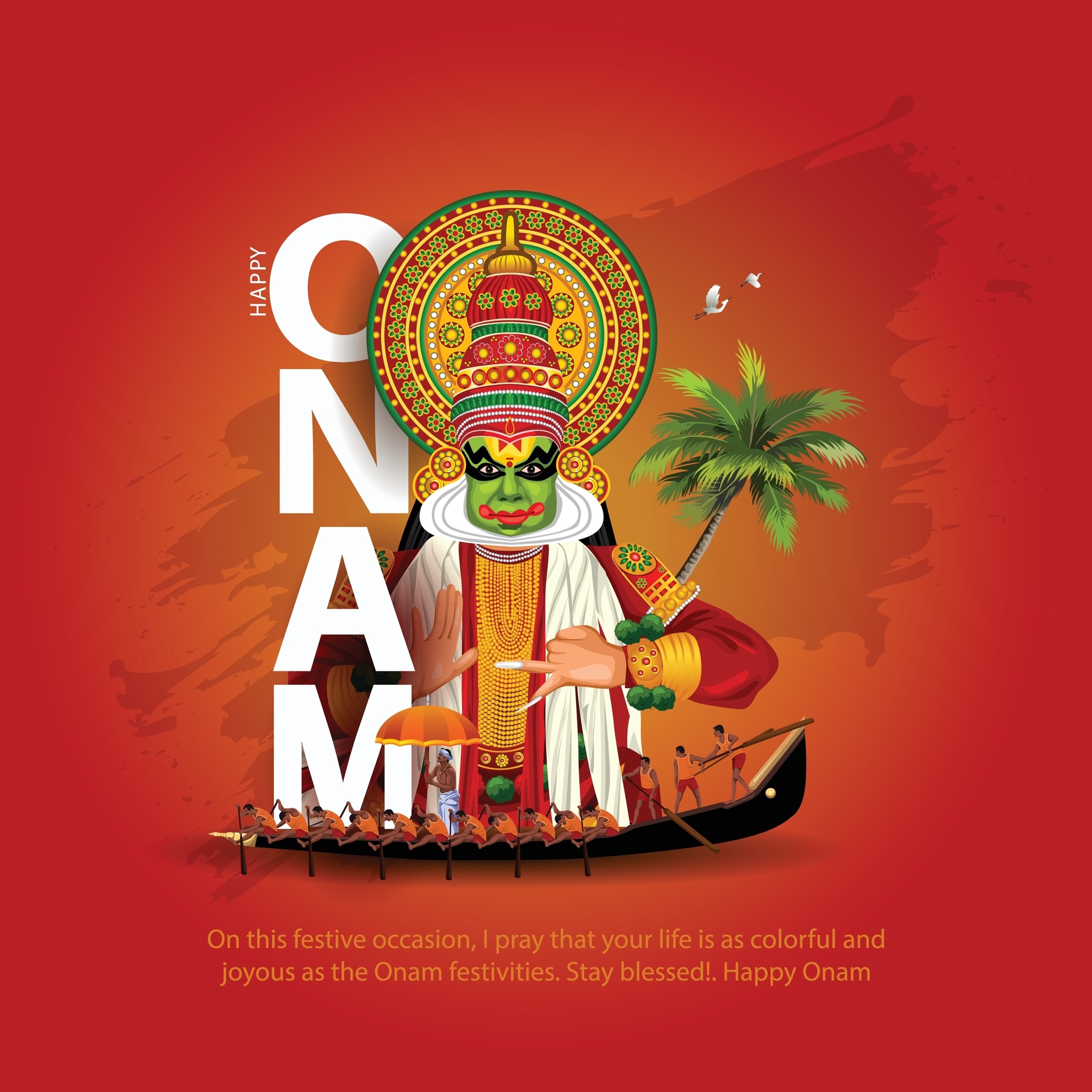
Some festivals light up the sky. Onam lights up your heart. In Kerala, this isn’t just a celebrationit’s a return to innocence, a warm memory coming alive, a season of belonging.
As the Malayalam month of Chingam begins around August or September there’s a quiet shift across Kerala. The monsoon starts to ease, the sun peeks through more often, and the scent of fried banana chips and fresh jasmine floats through the air. The days feel slower and fuller. This is the time of Onam a homecoming not just for King Mahabali, but for families, friendships, and memories.
Shape
Mahabali: The King Who Still Lives in Our Hearts
Every Malayali child grows up hearing the story of Mahabali. It’s told at the dinner table, during a long car ride, or while plucking flowers early in the morning during Onam.
Mahabali wasn’t a god or a hero in shining armor. He was an asura a member of a demon clan in mythology. But he ruled with a heart so kind, so just, that people still remember him centuries later. Under his reign, no one went hungry, no one lied, and no one feared injustice. It’s said that Kerala flourished in every way possible—love, life, and livelihood.
But even the gods grew uneasy watching this harmony. They feared his growing influence. So, they sought help from Lord Vishnu, who came disguised as a small, humble Brahmin boy Vamana. Vamana asked the king for three feet of land. Mahabali, known for his generosity, agreed without hesitation.
Then Vamana grew, suddenly and immeasurably. With one step, he covered the skies. With the second, he claimed the earth. And with nowhere left to place the third, Mahabali bowed his head, offering himself.
But Vishnu wasn’t cruel. He saw the king’s heart. Instead of sending him to the depths, he granted Mahabali a blessing: once every year, he could return to visit his beloved people. That return is what we call Onam.
The Ten Days That Lead to Magic
Onam isn’t just a day it’s a slow, steady build-up of joy over ten days, starting from Atham. And if you’ve grown up in Kerala, you know the rhythm of these days by heart.
Each morning begins early. Not with alarms or urgency but with quiet excitement. Children wake up before the sun, often nudged gently by their grandmothers. After their baths, they step outside barefoot, carrying small palm-leaf baskets. You’ll find them in gardens, along fences, even by the roadside, carefully picking flowers thumbapoo, chembarathi, theetti, mukkutti. They never pluck roughly. There’s a gentle reverence in how they choose each bloom.
Back home, the courtyard is cleaned, sprinkled with water, and swept with fresh broom strokes. The Pookalam, a circular flower design, starts small. At first, just a simple ring. But each day, a new layer of petals is added. The whole family pitches in—some on their knees placing petals with concentration, others watching and gently correcting. Old Malayalam songs or the murmur of temple prayers usually hum in the background.
As the days go by from Chithira to Anizham preparations deepen. Households buzz with energy. New clothes, or Onakkodi, arrive in plastic bags from textile shops. Banana chips are fried in bubbling oil and stored in tall steel tins. Sweet smells float from the kitchen. Elders recount how their childhood Onams had fewer dishes but more laughter. Relatives begin arriving from cities, some from across the world cousins return, hugs last a little longer, and homes echo with inside jokes and childhood nostalgia.
On Pooradam, the clay idols of Mahabali and Vamana, known as Onathappan, are placed at the center of the Pookalam. They’re handmade, sometimes lopsided, but deeply symbolic. It’s as if the family is whispering, “You’re home now.”
Shape
Thiruvonam: The Day the World Feels Whole
And then comes Thiruvonam, the crown jewel of Onam.
Before the first light of dawn, lamps are lit. Mothers and grandmothers are already in the kitchen, mixing, grinding, roasting. The entire house carries the scent of curry leaves, coconut, and ghee.
Everyone dresses up. The women wear kasavu sarees off-white with gold borders. Their hair is braided and adorned with strands of jasmine. Men wear mundu, some crisply ironed, some a little wrinkled from travel but everyone glows. The children run from room to room, showing off their Onakkodi, already stained with payasam or chips, but smiling ear to ear.
The final Pookalam is completed. Maybe a petal is out of place. Maybe the circles aren’t perfectly even. But no one minds. It was made together—with stories, giggles, and shared silence. That’s what matters.
Then comes the Onam Sadya—a feast that stretches across floors and hearts. Families sit cross-legged around banana leaves. One by one, dishes are served: sambar, olan, avial, pachadi, erissery, thoran, kaalan, parippu, and more. Each bite is a memory. Every dish has a story. And then, payasam—sweet, creamy, warm—served in rounds until someone finally says, “Bas!” (Enough.)
Shape
Thiruvathira, Club Programs, and the Mahabali in Every Street
Onam doesn’t stay within the walls of a house. It spills out—into streets, playgrounds, and hearts.
Local clubs and arts societies begin preparing for weeks. There are dance performances, mimicry, skits, and even tug-of-war competitions. You’ll hear drums beating from the next street and run to see someone dressed as Mahabali, walking barefoot with folded hands, blessing children and posing for photos. It’s hard not to believe he’s real in that moment.
In villages and towns, women gather for Thiruvathirakali, a graceful dance performed in circles around a lamp. Their movements are soft, their smiles shy but radiant. Children chase each other playing Uriyadi, where a clay pot is hung high and broken blindfolded. Others play Kuttiyum Kolum, a traditional stick game that’s survived generations.
And through it all, there’s movement families traveling between homes, cousins returning from far-off cities, uncles arriving with bags full of sweets, grandparents telling stories of simpler times. You may sleep on the floor that night, shoulder to shoulder with five cousins but your heart has never felt more at home.
Shape
Onam Belongs to Everyone
What makes Onam special isn’t just its rituals—it’s its spirit. It may be rooted in Hindu mythology, but people of all religions and communities celebrate it together in Kerala. Muslim, Christian, Hindu—everyone lays flowers, cooks Sadya, and welcomes Mahabali.
Even Malayalis living far from home recreate Onam as best they can. They buy flowers from grocery stores, cook Sadya with whatever’s available, and video call home to feel less far away. The taste may not be perfect but the love is real.
Shape
The Real Meaning of Onam
Onam reminds us of a time real or imagined when there was justice, unity, and joy. It tells us that kings are remembered not for power, but for kindness. That traditions live in hearts, not just homes.
When you lay that last petal on the Pookalam, when you eat that first spoon of payasam, you’re not just celebrating a festival. You’re telling Mahabali, “We still remember. We still welcome you.”
And maybe, just maybe, he smiles seeing his people still full of love.
Happy Onam. May your days be full of flowers, laughter, and homecomings. 🌼