


A Monsoon Safari Story: The Sharmas Hit the Road to Sariska
Rain clouds gathered over the Aravalli hills as the Sharma family loaded their car that Wednesday morning. Twelve-year-old Raghav kept scrolling through wildlife photos on his phone, while eight-year-old Vamika pressed her nose against the window, already imagining tigers in every roadside bush.
“We’re going to see real wild animals, right Papa?” Vamika asked for the hundredth time since they’d left Delhi.
Their destination wasn’t just any safari. The family had planned a monsoon adventure to Sariska’s buffer zones – the areas that stay open when the main park closes during the rains. This was going to be different from their usual hill station trips.
The Road to Wild
The drive from Delhi took them through Thanagazi, where they stopped for hot tea and samosas. The kids stretched their legs while Mr. Sharma checked the weather forecast one more time. The monsoon meant muddy roads, but it also promised something special, a forest coming alive after the first rains.
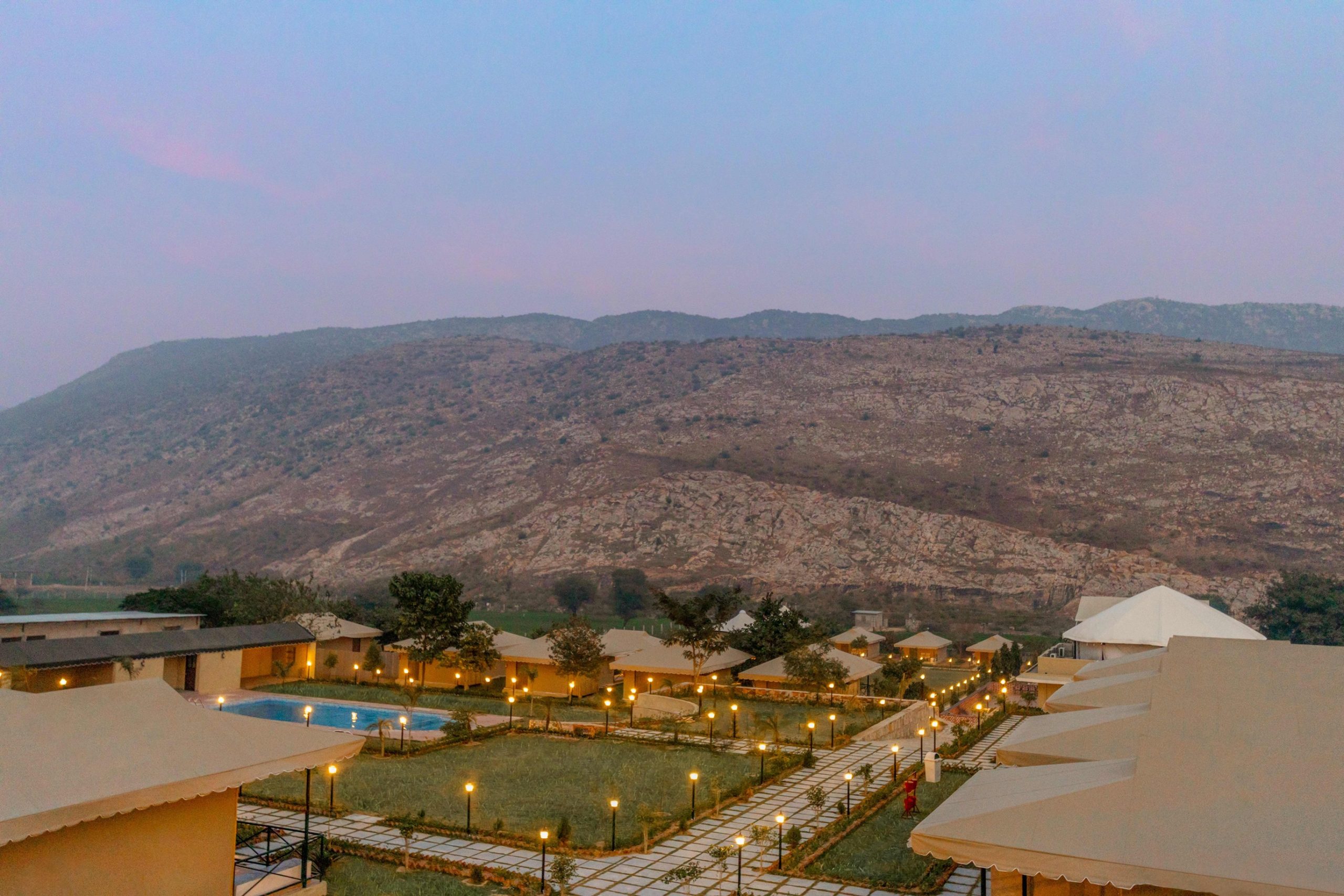
Their home for the next three days was Sterling ReWild Sariska, tucked away near the tiger reserve. The moment they pulled up, Raghav’s jaw dropped. The tents weren’t what he’d expected. These were proper heritage-style accommodations with comfortable beds and even a small pool attached to their unit.
“This is way cooler than a hotel,” he admitted, dropping his phone to explore.
Mrs. Sharma smiled, watching her tech-obsessed son actually engage with the surroundings. The tent’s deck looked out over the Aravalli hills, and she could already picture herself with her morning coffee, watching the sunrise.
When the Forest Calls
The next morning brought their first real adventure. Their safari was to the Bala Quila area, accessible through the buffer zone gates that operate even during monsoon season. The safari duration would be around 3.5 hours, giving them plenty of time to explore.
The guide loaded their jeep with waterproof covers and extra jackets. “Monsoon safaris are special,” he explained. “The animals are more active, and the landscape transforms completely.”
He wasn’t kidding. As they entered the buffer zone, the forest looked nothing like the dry, dusty terrain they’d seen in photos. Everything was green and alive. The ancient Bala Quila fort appeared through the morning mist like something from a fairy tale.
Then it happened. A magnificent peacock stepped onto the path ahead, but didn’t spread his tail feathers, I wish to see that. The light rain made the colors shimmer.
“Oh my God, look at that!” Vamika whispered, her binoculars glued to her eyes.
Even Raghav put down his phone to watch. The peacock seemed to be performing just for them, dancing in the drizzle as if celebrating the monsoon’s arrival.
Wild Encounters
The buffer zone areas were home to leopards, the world’s second-largest cat, though they didn’t spot any during their morning safari. Instead, they saw sambars grazing peacefully, langurs swinging through the trees, and countless birds taking advantage of the fresh water and insects that come with the rains.
The kids learned to identify different bird calls. Vamika got excited every time she spotted a new species through her binoculars. Raghav, meanwhile, discovered that watching animals in their natural habitat was way more interesting than any nature documentary.
For families planning similar trips, the buffer zones offer something the crowded main parks can’t – space and time to really observe wildlife behavior.
Evening Magic
Back at Sterling ReWild Sariska, the evenings held their own surprises. The in-house naturalist organized stargazing sessions, pointing out constellations that were clearer during the monsoon season. The kids, who usually fought over screen time, found themselves lying on the deck asking questions about nocturnal animals and night sounds.
The pool area became their evening hangout spot. The infinity edge seemed to blend with the hills, creating perfect sunset views. Mrs. Sharma, who usually worried about managing everyone’s needs, found herself actually relaxing for the first time in months.
The Real Discovery
What surprised the Sharmas most wasn’t the wildlife they saw, but how the experience changed their family dynamics. Raghav, typically glued to his devices, became genuinely interested in learning about the ecosystem. Vamika developed a passion for bird identification that continued long after their return home.
The monsoon timing meant fewer crowds and a more intimate experience with nature. The buffer zones proved that you don’t need to see a tiger to have an incredible wildlife experience, sometimes the magic is in the small moments, like watching a peacock dance in the rain or listening to the forest wake up at dawn.
As they packed to leave, both kids were already planning their next visit. The Sharma family had discovered that the best adventures aren’t always the most famous ones – sometimes they’re found in the quiet corners of incredible places, where you can slow down and let nature set the pace.
Their monsoon safari had given them something no regular vacation could, a genuine connection with the wild world that exists just beyond the city’s edge.
When clouds roll over the Aravallis and the wild comes alive, all it takes is one drive to rediscover wonder.