


Amargarh, Jodhpur: A Fort Stay That Unfolds, Not Performs
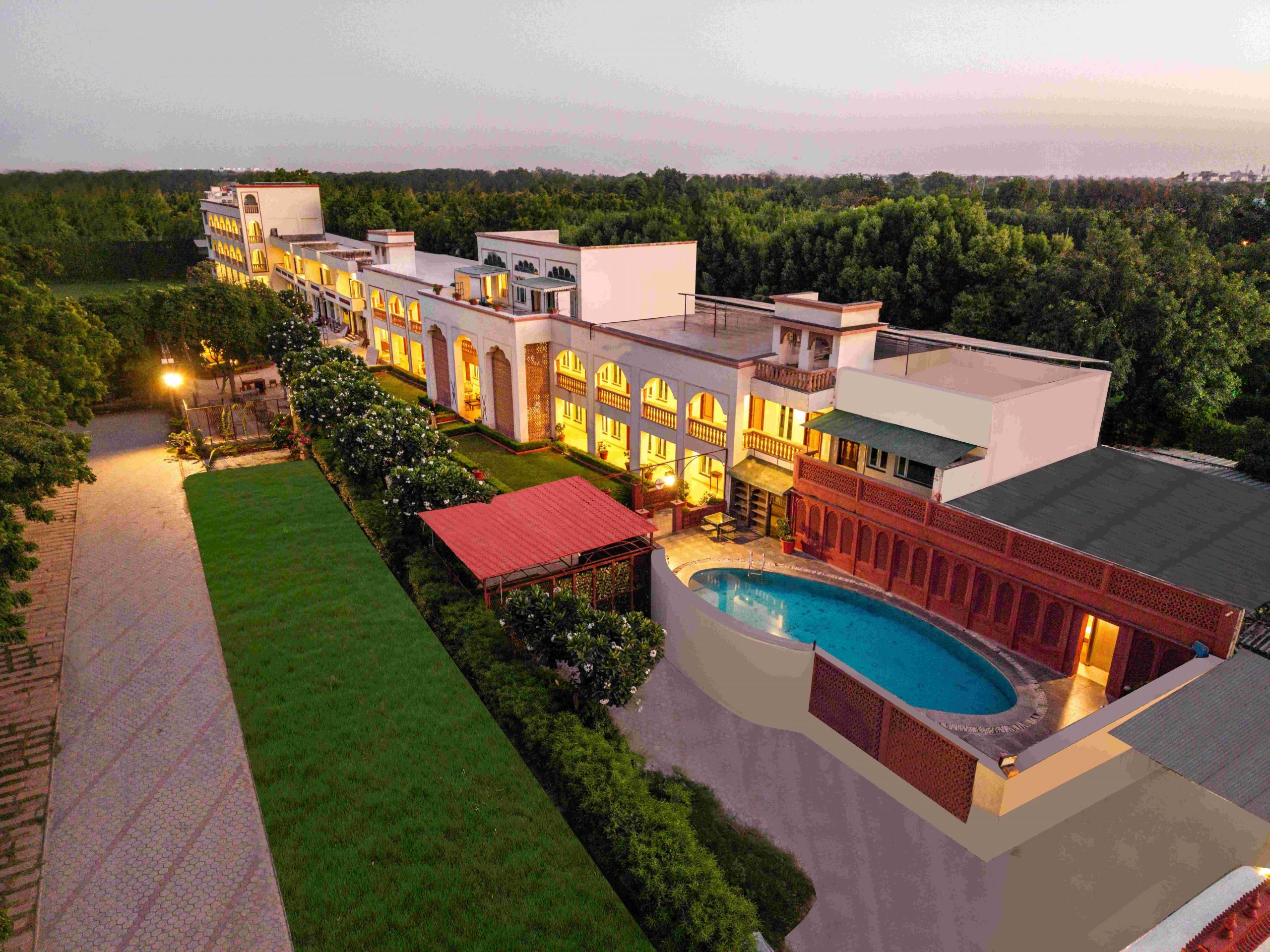
There is a distinct moment, just beyond the edges of Jodhpur, where the city loosens its grip. The density of the blue lanes fades, traffic thins, and the landscape opens into something drier, quieter, more elemental. It is here, in this transition, that Sterling Amargarh Jodhpur begins to make sense.
Not as a resort placed on land but as a structure that feels like it belongs to it.
From the outside, Amargarh carries the language of a fort stone facades, symmetrical arches, high boundary walls but it does not rely on spectacle. The approach is gradual. The structure reveals itself in parts, never all at once, and that restraint defines the experience that follows.
The arrival reflects the same tone.
There is no theatrical welcome, no forced performance of hospitality. The front office team works with a measured ease efficient, observant, and aware of guest fatigue. Check-in is quick, luggage is handled without interruption, and within minutes, guests are led inward through corridors that begin to separate them from the outside world.
Because Amargarh is not designed to impress instantly.
It is designed to unfold.
The architecture is its strongest voice.
Built around multiple courtyards, the property uses space deliberately. Corridors narrow and open unpredictably, leading into sunlit squares framed by arches and traditional jharokhas. The play of light is constant—harsh desert brightness filtered into softer, shifting patterns across stone surfaces.
Materials are left honest.
The sandstone retains warmth, the walls carry a textured finish, and the detailing—carved brackets, latticework, recessed alcoves—feels embedded rather than applied. There is no over-styling here. No attempt to dramatize heritage. The design holds back, and that restraint creates authenticity.
Movement through the property becomes an experience in itself.
Guests don’t navigate Amargarh in straight lines—they discover it.
The rooms extend this philosophy.
Across Classic Rooms, Premier Rooms, and Suites, the design remains consistent, but the experience evolves through scale and openness.
The Classic Rooms are compact yet grounded—functional spaces where the emphasis is on comfort rather than excess. They introduce the design language without overwhelming it.
The Premier Rooms expand that experience. More space, better spatial flow, and sit-out areas or larger windows begin to connect the interiors to the landscape outside. This is where the architecture starts to breathe.
The Suites take it further.
They are not simply larger rooms—they are extensions of the property’s spatial thinking. Separate living areas, deeper layouts, and a stronger relationship with courtyards or open views make them feel less like accommodation and more like private sections of the fort itself.
Across all categories, certain constants remain—muted tones, solid furnishings, warm lighting, and an absence of unnecessary decoration.
Nothing demands attention.
Everything earns it.
Beyond the built form, the open spaces define the rhythm of the stay.
Amargarh is not just stone and structure—it is also air and pause.
Green pockets and lawns are woven into the layout, softening the desert harshness without overpowering it. These spaces are not expansive for the sake of scale—they are placed with intent, creating transitions between built and open environments.
During the day, they remain quiet, almost still.
By evening, they begin to shift.
The central courtyard becomes the focal point. As the light fades, the stone takes on a deep amber tone, and the space transforms into a setting that feels both intimate and expansive. Cultural performances—rooted in Rajasthani folk traditions—take over the courtyard. Music carries across the arches, rhythms settle into the space, and guests gather naturally, drawn not by announcement but by atmosphere.
It doesn’t feel staged.
It feels placed.
Dining at Amargarh continues this sense of grounding.
At Sangri, the all-day dining restaurant, the experience is consistent with the rest of the property—unforced, structured, and rooted in place. The space itself mirrors the architecture: arched openings, warm tones, and a layout that prioritizes comfort over spectacle.
The menu reflects both regional and familiar influences, but it is the Rajasthani dishes that define the experience. Preparations like dal baati churma, ker sangri, gatte ki sabzi, and laal maas carry the depth and robustness expected of the region—flavours shaped by climate, tradition, and time.
For those seeking a more immersive setting, the Al Fresco dining experience in the courtyard shifts the mood entirely.
Here, the meal extends beyond the plate.
Under the open sky, within the enclosure of fort walls, dining becomes atmospheric. The cooler evening air, the echo of live folk music, and the visual rhythm of lit courtyards create a setting that feels both expansive and contained.
It is not curated to impress.
It is designed to linger.
The relationship between the resort and the city completes the experience.
Jodhpur itself offers contrast—its intensity, colour, and history remain essential to the journey. A visit to Mehrangarh Fort introduces scale and narrative, its towering presence dominating the skyline. Jaswant Thada offers quiet reflection, while the markets around Clock Tower Jodhpur bring back the city’s pulse.
But the defining pattern is the return.
Because Amargarh does something the city cannot.
It absorbs the excess.
It creates distance—not in geography alone, but in experience. It allows guests to engage with Jodhpur fully, and then step away from it just as completely.
By the end of the stay, what remains is not a checklist of features.
It is a shift in pace.
The urgency of arrival fades. Movement slows. Silence becomes comfortable rather than empty.
Sterling Amargarh Jodhpur does not attempt to overwhelm with luxury or constant engagement.
It offers something far more difficult to create.
A space that does not ask for attention—
but holds it anyway.