


Misty Mornings and Tea Estates: Summer in Munnar Feels Different
Munnar never feels the same twice
This is not the first time I’m visiting Munnar, but somehow every trip here still feels fresh to me. Maybe it’s the weather, maybe it’s the mist slowly moving across the tea hills, or maybe it’s the way life automatically slows down once the roads start climbing towards Chinnakanal.
Chennai heat was the reason for this trip. By the middle of summer, the city starts feeling exhausting in a very specific way. The heat follows you everywhere — during traffic, inside cabs, even during late evenings when the roads still feel warm. Somewhere between work calls, deadlines, and stepping out into weather that felt unbearable almost every afternoon, I realised I needed a break.
Not a packed vacation.
Just colder weather, quieter mornings, and a few days away from routine.
That’s how Munnar happened.
And honestly, I didn’t plan much before the trip. I knew I wanted tea estates, mist, and weather cold enough to finally wear the sweaters sitting unused in my wardrobe.
What I didn’t expect was how quickly Munnar would slow me down.
Chinnakanal felt completely different from what I imagined
I stayed at Sterling Munnar in Chinnakanal, slightly away from the busier Munnar town side. The drive itself slowly started changing the mood of the trip. The weather became colder, the roads quieter, and tea plantations slowly replaced the city views I had been looking at for months.
By the time I reached the property, the mist had already started rolling across the hills.
And that first evening honestly changed the mood of the entire trip.
In Chennai, evenings usually mean traffic sounds, notifications, and rushing through the rest of the day. Here, it felt strangely quiet. Clouds slowly moved across the valley, temperatures dropped much faster than I expected, and for the first time in weeks, I sat somewhere without checking time constantly.
Waking up inside the tea estates felt unreal
The next morning was probably my favourite part of the trip.
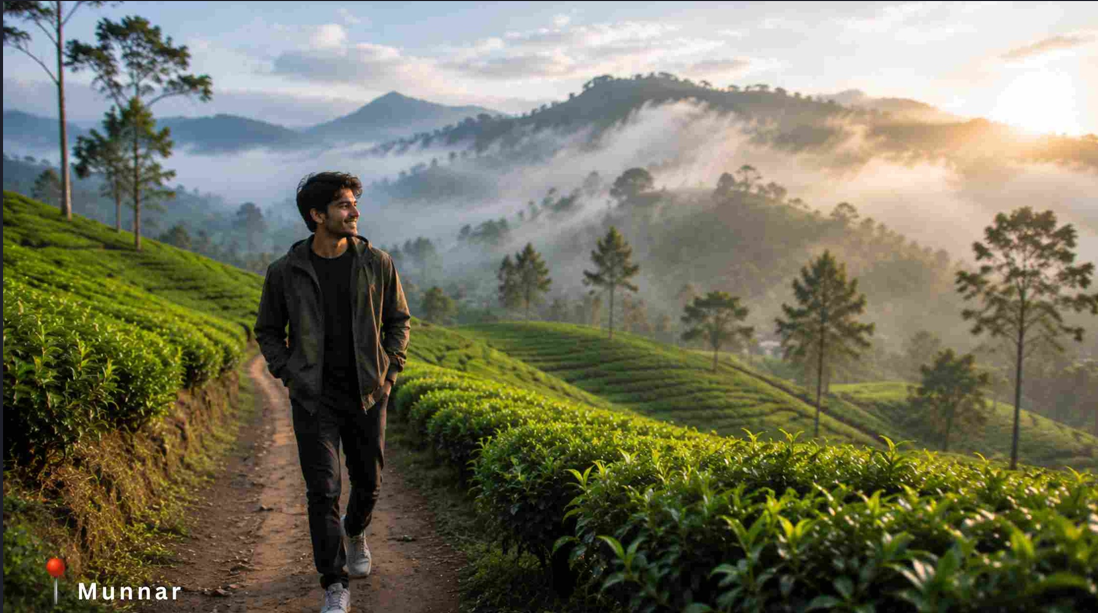
I woke up expecting regular hill-station weather, but Chinnakanal felt far colder and mistier than I imagined this time. At one point, the clouds moved so close across the tea hills that entire sections of the valley disappeared for a few minutes before slowly becoming visible again.
And unlike many stays where tea estates become a sightseeing stop later in the day, here they felt like part of the stay itself.
Tea plantations surrounded the property almost everywhere. Early mornings usually began with tea pickers moving through the estates while mist slowly covered the hills behind them. There was no need to “go looking” for Munnar scenery because it was already there the moment the day began.
That’s probably what made the atmosphere feel different.
Nothing felt rushed.
Estate walks felt better than sightseeing plans
I had initially planned to cover more tourist spots around Munnar, but somewhere after the estate walks, those plans slowly stopped mattering as much.
Walking through tea plantations in this weather feels strangely calming. The smell of fresh tea leaves, quiet roads, cold breeze, and mist changing the view every few minutes somehow make people slow down naturally.
Some parts of the hills would suddenly disappear behind clouds and reappear again while walking. Even simple conversations felt quieter in that atmosphere.
And honestly, that unpredictability became the best part.
Unlike crowded tourist spots where people usually rush from one place to another, the tea estate side of Chinnakanal felt slower. People walked without urgency here.
At some point during the walk, I realised I had stopped thinking about work completely.
That almost never happens.
The weather changed the pace of everything
One thing nobody properly explains about Munnar summers is how different they feel compared to cities below.
Back in Chennai, summer means trying to stay indoors as much as possible. In Munnar, I spent more time outside because the weather itself made everything feel better.
Tea tasted better.
Long walks felt easier.
Even sitting quietly doing nothing didn’t feel boring.
Evenings at Sterling Munnar slowly became my favourite part of the trip. Some guests sat outdoors with tea watching the mist move across the hills, while others simply stayed outside because the cold weather felt too pleasant to head indoors immediately.
At one point, light rain started falling while the entire valley stayed covered in clouds. Nobody moved. People just continued sitting there quietly watching the mist roll across the tea estates.
That atmosphere is difficult to explain properly unless experienced in person.
The stay felt connected to Munnar itself
Another thing I enjoyed about Sterling Munnar was that the experience didn’t feel separated from the place around it.
Tea tasting sessions, bird-watching trails, trekking routes, and nature-based activities around the property felt connected to Munnar instead of feeling like regular resort activities added just for entertainment.
Even families travelling with children looked more relaxed here because the atmosphere naturally encouraged slower travel instead of rushing through plans.
And honestly, Munnar feels best that way.
Not as a checklist trip.
But as a place where people slowly stop rushing.
I came back remembering the weather more than the photos
Usually after trips, I come back remembering the places I visited.
This time, I mostly remembered the feeling.
The cold air during mornings, mist slowly covering the tea estates, evenings where clouds disappeared into the hills, and those quiet moments where absolutely nothing felt urgent anymore.
Maybe that’s why Munnar still feels fresh every single time I visit.
The hills never really change.
But somehow the feeling always does.
Closing Note
For anyone trying to escape the heat and routine of city life, misty summers in Munnar feel less like a vacation and more like a reset. And somewhere between the tea estates, colder weather, and cloud-covered evenings, Sterling Munnar naturally becomes part of that slower and quieter side of the hills.