


Best Places to Visit in Ayodhya Near Ram Mandir and the Sacred Saryu Ghats
On the banks of the Saryu River in Uttar Pradesh, Ayodhya is one of India's most visited pilgrimage destinations, with search interest surging ever since the Ram Mandir's consecration in January 2024. Revered as the birthplace of Lord Rama and counted among Hinduism's seven sacred Sapta Puri cities, this temple town anchors any list of the best places to visit in Ayodhya with a skyline of spires, ghats and centuries-old shrines. For pilgrims and heritage travellers alike, it pairs deep devotional significance with a compact, walkable old city that's easy to cover in a short trip.
The undisputed centrepiece is the Ram Mandir at Ram Janmabhoomi, drawing pilgrims for darshan of Ram Lalla throughout the day, while the hilltop Hanuman Garhi temple and the ornate Kanak Bhavan, associated with Ram and Sita, round out the city's most-visited shrines. Along the river, the ghats of Ram Ki Paidi and Guptar Ghat, where tradition holds Lord Rama took jal samadhi into the Saryu, come alive each evening with aarti, while sites such as Nageshwarnath Temple, Treta Ke Thakur and Sita Ki Rasoi trace older layers of the city's Ramayana-linked history. Ayodhya sits about 135 kilometres from Lucknow and is well connected to Varanasi and Prayagraj, making it an easy addition to a wider Uttar Pradesh pilgrimage circuit.
Much of the city's momentum today comes from its transformation since the temple's Pran Pratishtha, with a widened riverfront, a new international airport, and a redeveloped railway station drawing steadily rising visitor numbers through the year. The annual Deepotsav festival, held on the eve of Diwali, has repeatedly set Guinness World Records by lighting more than twenty-five lakh earthen lamps along the Saryu ghats, drawing pilgrims and photographers from across the country. This mix of ancient devotion and fast-paced infrastructure growth is what keeps this Ram Nagri firmly on the radar for a meaningful pilgrimage stay.
Our Resort(s) at Ayodhya

Important Information
State: Uttar Pradesh
District : Ayodhya district, Ayodhya division
Destination Type: Heritage / Pilgrimage town
Nearest Airport : Maharishi Valmiki International Airport, within Ayodhya city
Nearest Railway Station : Ayodhya Dham Junction, within Ayodhya city
Road Connectivity : Well connected via NH27 and NH330 to Lucknow, Varanasi, Gorakhpur, and Prayagraj
Languages: Hindi and Awadhi are widely spoken locally, with English also understood
Summer (March to June) : Hot days with highs of 39° in May–June and nights from around 20°C.
Monsoon (July to September) : Warm and humid with regular rainfall, keeping the riverside city green but occasionally waterlogged
Winter (October to February) : Cool and pleasant, between about 7°C and 23°C, with chilly mornings and evenings and the most comfortable afternoons for sightseeing
Climate: cool and pleasant summers, winters are cold and windy
Best time to visit: November – February
QUICK FACTS
OUR RESORTS IN AYODHYA
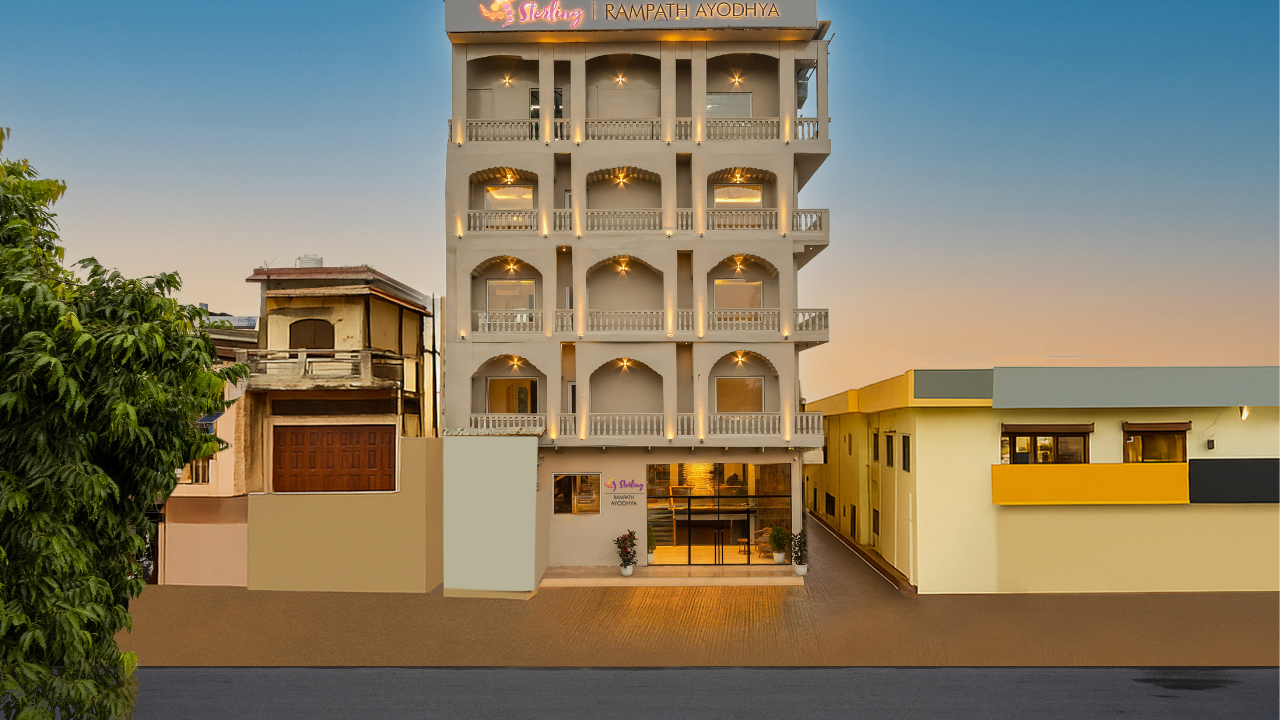
Sterling Rampath Ayodhya
Located a short drive from the Ram Mandir, Sterling Rampath Ayodhya is designed for pilgrims, families, and cultural travellers looking for a restful base close to the temple town's spiritual heart. Its 36 rooms are largely city-view, looking out over Ayodhya's rooftops and temple spires, and the property keeps to a pure vegetarian dining philosophy paired with Sterling's signature hospitality, giving guests an easy, comfortable stay between temple visits and evening aarti at the ghats.

Sterling Saryu Ayodhya
Named after the sacred Saryu River, Sterling Saryu Ayodhya sits close to both the city's airport and railway station, making it a convenient stay for pilgrims arriving from across the country. The resort's 40 rooms are built around a windowless, cocoon-style design that keeps most rooms dark and quiet for undisturbed rest after long days of temple visits, with all-day multi-cuisine dining at The Saryu Café and a banquet hall for group stays and celebrations.
LOCATION & INFORMATION
State: Uttar Pradesh
District : Ayodhya district, Ayodhya division
Destination Type: Heritage / Pilgrimage town
Nearest Airport : Maharishi Valmiki International Airport, within Ayodhya city
Nearest Railway Station : Ayodhya Dham Junction, within Ayodhya city
Road Connectivity : Well connected via NH27 and NH330 to Lucknow, Varanasi, Gorakhpur, and Prayagraj
Languages: Hindi and Awadhi are widely spoken locally, with English also understood
Climate: cool and pleasant summers, winters are cold and windy
Best time to visit: November – February
Summer (March to June) : Hot days with highs of 39° in May–June and nights from around 20°C.
Monsoon (July to September) : Warm and humid with regular rainfall, keeping the riverside city green but occasionally waterlogged
Winter (October to February) : Cool and pleasant, between about 7°C and 23°C, with chilly mornings and evenings and the most comfortable afternoons for sightseeing
BEST TIME TO VISIT
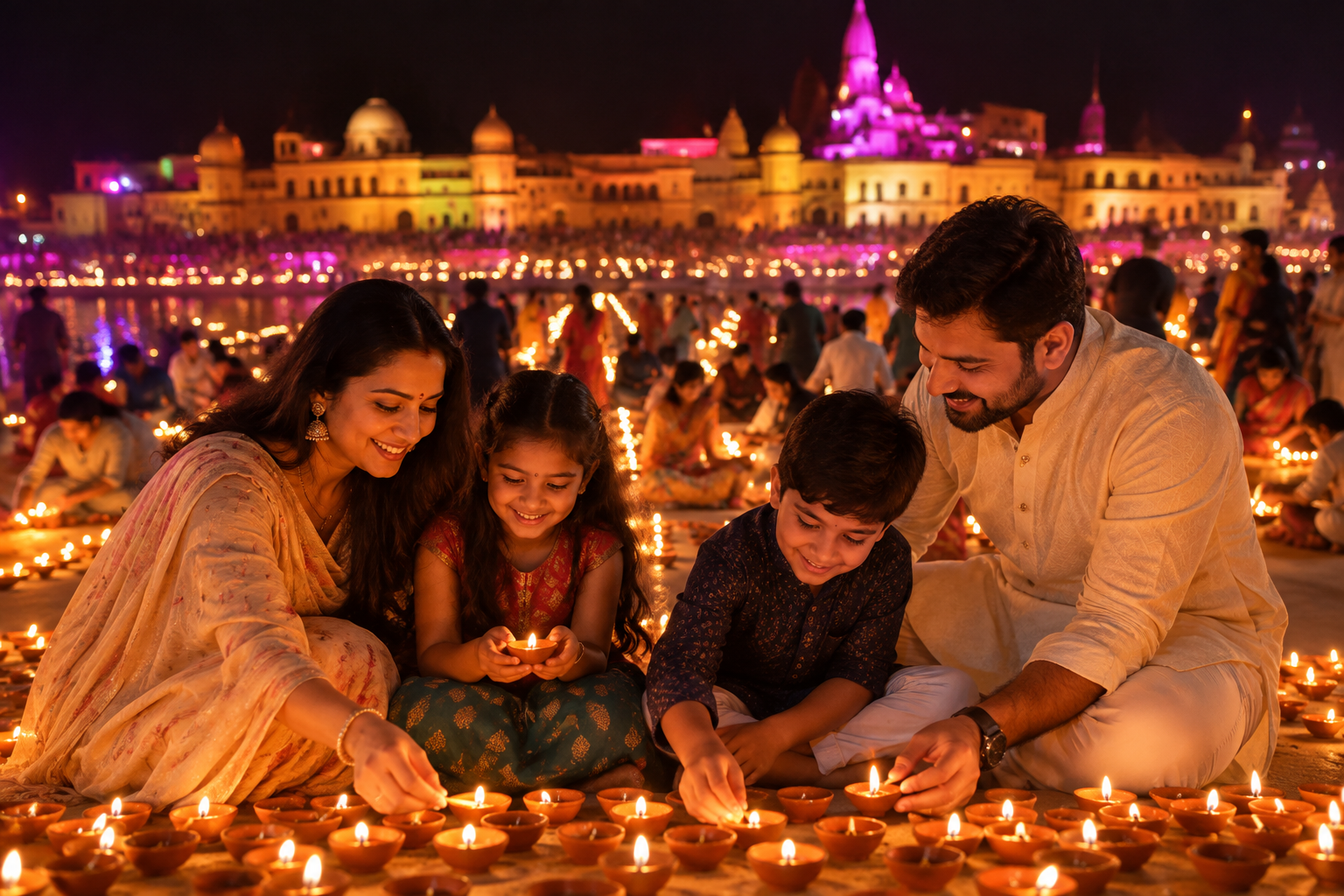
October to February - Winter, Cool & Ideal for Sightseeing
October to February is widely considered the best season to visit Ayodhya, with daytime temperatures between a mild 7°C and 23°C, comfortable for walking between temples and along the ghats. This stretch also covers two of the city's biggest events: Kartik Purnima, when lakhs of pilgrims take a holy dip in the Saryu, and the annual Deepotsav festival on the eve of Diwali, when the ghats are lit with lakhs of earthen lamps in a record-setting display.
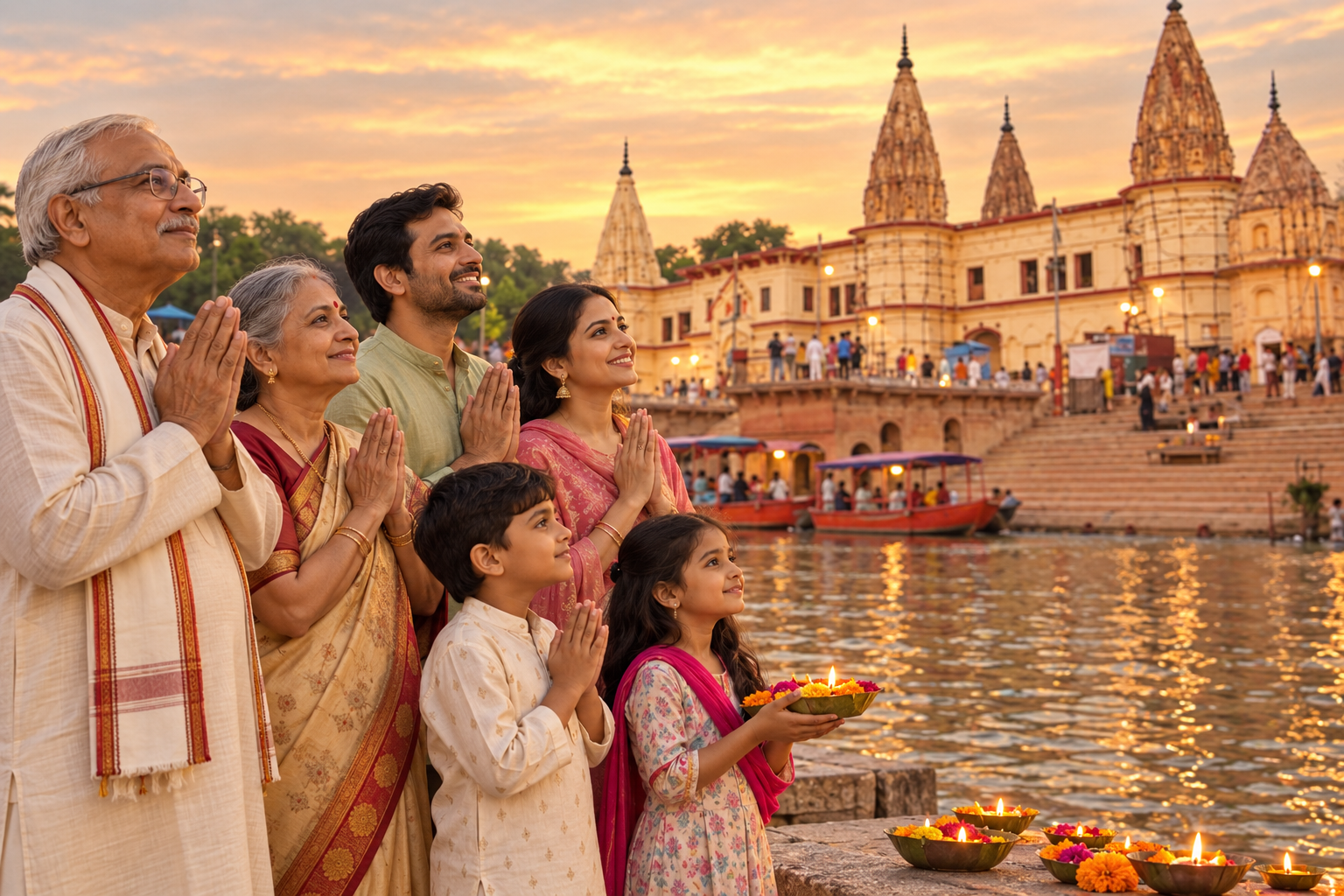
March to June - Summer & Ram Navami Season
Summer brings hot days with temperatures climbing to around 39°C, though early-morning temple visits stay comfortable before the heat sets in. Chaitra, usually falling in March or April, brings Ram Navami, Ayodhya's most crowded festival, when the Surya Tilak ceremony bathes the Ram Lalla idol's forehead in sunlight at noon and pilgrim numbers run into the millions, so this window suits travellers keen on the festival atmosphere more than cooler weather.
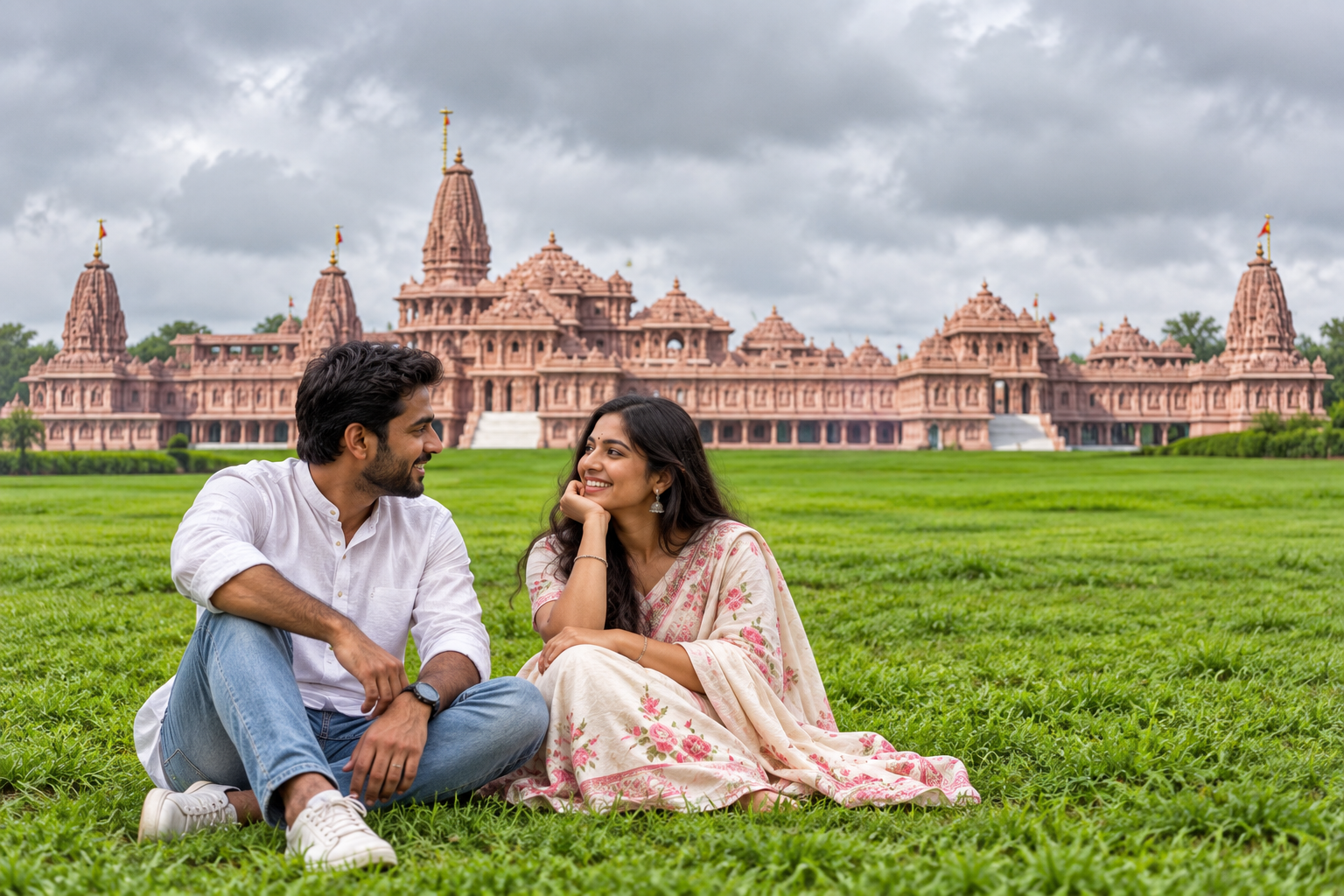
July to September - Monsoon
The monsoon cools things down with regular rainfall and lush greenery along the Saryu, though the ghats can get slippery and river levels rise. It's the quietest season for travel, with shorter queues at the Ram Mandir and a slower, more contemplative pace to temple visits.
For the most comfortable sightseeing, plan a visit between October and February, ideally timed around Kartik Purnima or Deepotsav for a festival experience alongside pleasant weather. If a Ram Navami trip in March or April is the priority, book accommodation well ahead and expect the heaviest crowds of the year around the Ram Mandir.
Gallery


