


Best Places to Visit in Mount Abu for Aravalli Views and Marble Temple Heritage
Perched at around 1,219 metres above sea level, this is the only hill station in Rajasthan, rising out of the Sirohi district as a cool, forested plateau in a state better known for its deserts. That contrast alone makes it a fixture on almost every search for places to visit in Rajasthan during the summer months, when travellers escape the plains for the shaded slopes of the Aravalli Range.
At the centre of it all sits Nakki Lake, widely regarded as India's first man-made lake, ringed by boat rides, cafes, and the oddly shaped Toad Rock. A short drive away, the Dilwara Jain Temples, built between the 11th and 13th centuries, hold some of the finest marble carving in the country and remain one of Rajasthan's most visited pilgrimage sites. For sweeping views, Guru Shikhar, the highest point of the entire Aravalli Range, rewards a short climb with panoramic vistas and the Guru Dattatreya temple at its summit, while the Mount Abu Wildlife Sanctuary protects one of the last habitats of the Indian leopard alongside the grey jungle fowl and golden jackal.
Achalgarh Fort, built in the 15th century by the Rajput rulers of Mewar, sits close to a cluster of ancient Shiva shrines, while Trevor's Tank, a quiet crocodile breeding sanctuary, makes for an easy picnic stop away from the main crowds. Pilgrims often combine a visit with Adhar Devi Temple, carved into a cleft in the rock and reached by a flight of stone steps, and the tranquil Brahma Kumaris Peace Park, tucked between Guru Shikhar and Achalgarh. Evenings are best spent browsing the bazaars around Nakki Lake for silver jewellery, Rajasthani handicrafts and woollen shawls.
Our Resort(s) at MOUNT ABU

Important Information
State: Rajasthan
District: Sirohi
Destination Type: Hill Station
Nearest Airport: Udaipur Airport (about 176 km away); Ahmedabad Airport is a farther alternative at around 230 km
Nearest Railway Station: Abu Road Railway Station (about 26 km away)
Road Connectivity: Well connected via state highways from Udaipur, Ahmedabad, and Sirohi, with a steep but scenic ghat road leading up to the plateau
Languages: Hindi, Marwari, Gujarati and English
Summer (March to June): Mild by Rajasthan standards, with temperatures between 25°C and 29°C, making it the state's most popular summer retreat
Monsoon (July to September): Cool and misty, with temperatures ranging from 24°C to 29°C and the hillsides at their greenest
Winter (October to February): Crisp and cold, with temperatures dropping between 12°C and 20°C, and chilly nights around the Winter Festival in late December
● Start the drive up the ghat road early in the day to enjoy clearer views and avoid the crowds that build up by afternoon.
● Cameras and phones are not permitted inside the Dilwara Jain Temples halls, so plan to simply take in the carvings rather than photograph them.
● Book accommodation and Winter Festival tickets ahead if visiting between 29 and 31 December, when the town fills up for its biggest annual event.
● Carry a light jacket even in summer, since evenings on the plateau stay noticeably cooler than the rest of Rajasthan.
● Wear comfortable shoes for the climb to Guru Shikhar and the walk around Nakki Lake, both of which involve some uphill stretches.
● Keep safari and sanctuary visits to early morning or late afternoon for the best chance of spotting wildlife and to avoid the midday heat.
Quick Facts
Our Resort At Mount Abu
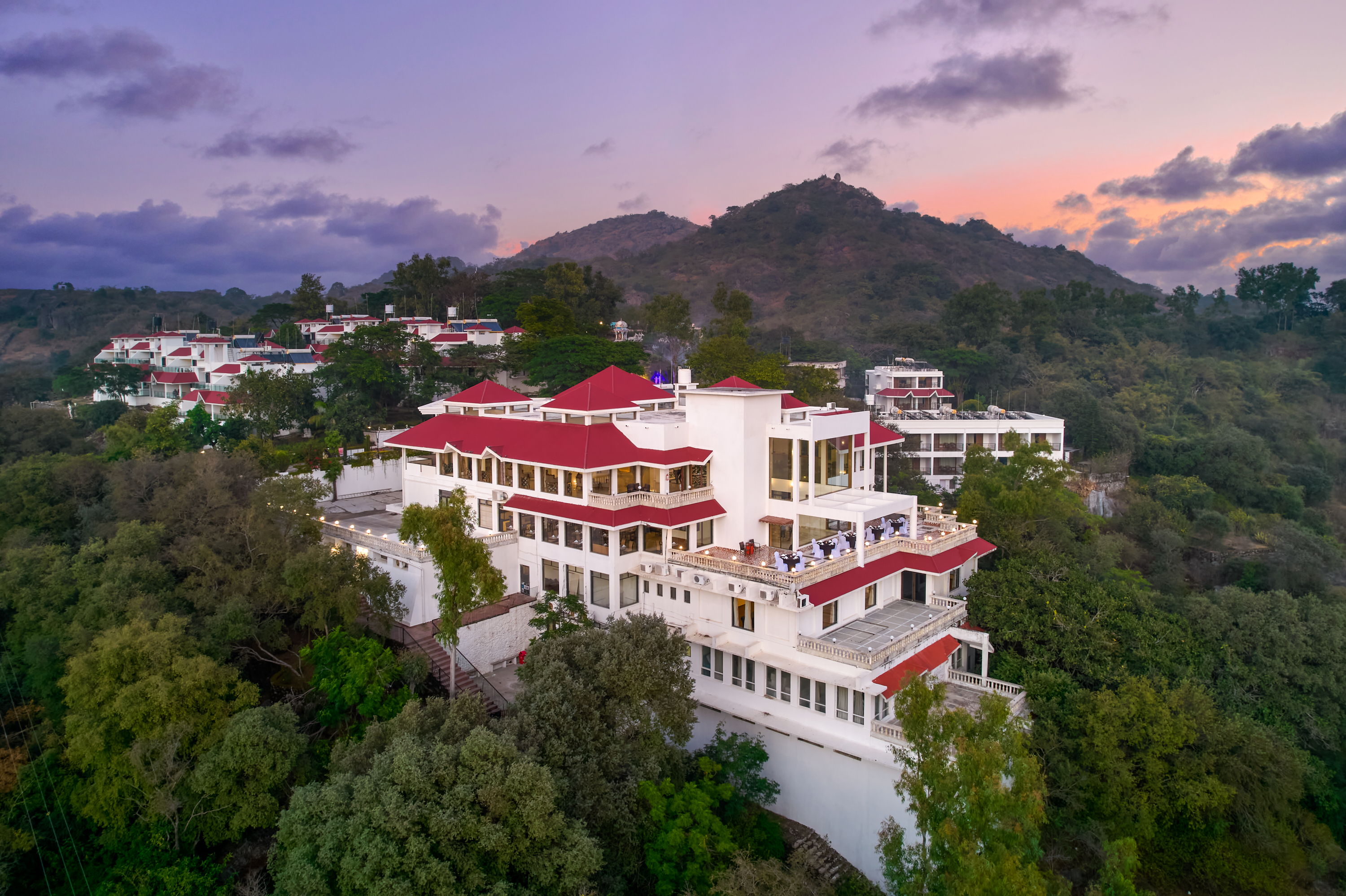
Sterling Mount Abu
Sterling Mount Abu, a 4-acre property with natural landscaping with 69 rooms include Classic Rooms with Sit Out and Premier Rooms with Sit Out, each opening onto a private balcony facing the hills, while the Studio rooms suit families travelling with extra company. Dining happens at Aravali, the in-house restaurant serving spiced Laal Maas alongside Gujarati-inspired vegetarian dishes like Papad Sabzi, or at Sterling LOCAL, the resort's restobar for regional drinks and light bites. With Nakki Lake and the Dilwara Temples both a short drive away, this property works as an easy base for covering the plateau's main sights without long transfers.
Location & Information
State: Rajasthan
District: Sirohi
Destination Type: Hill Station
Nearest Airport: Udaipur Airport (about 176 km away); Ahmedabad Airport is a farther alternative at around 230 km
Nearest Railway Station: Abu Road Railway Station (about 26 km away)
Road Connectivity: Well connected via state highways from Udaipur, Ahmedabad, and Sirohi, with a steep but scenic ghat road leading up to the plateau
Languages: Hindi, Marwari, Gujarati and English
● Start the drive up the ghat road early in the day to enjoy clearer views and avoid the crowds that build up by afternoon.
● Cameras and phones are not permitted inside the Dilwara Jain Temples halls, so plan to simply take in the carvings rather than photograph them.
● Book accommodation and Winter Festival tickets ahead if visiting between 29 and 31 December, when the town fills up for its biggest annual event.
● Carry a light jacket even in summer, since evenings on the plateau stay noticeably cooler than the rest of Rajasthan.
● Wear comfortable shoes for the climb to Guru Shikhar and the walk around Nakki Lake, both of which involve some uphill stretches.
● Keep safari and sanctuary visits to early morning or late afternoon for the best chance of spotting wildlife and to avoid the midday heat.
Summer (March to June): Mild by Rajasthan standards, with temperatures between 25°C and 29°C, making it the state's most popular summer retreat
Monsoon (July to September): Cool and misty, with temperatures ranging from 24°C to 29°C and the hillsides at their greenest
Winter (October to February): Crisp and cold, with temperatures dropping between 12°C and 20°C, and chilly nights around the Winter Festival in late December
Gallery


Best Time to Visit
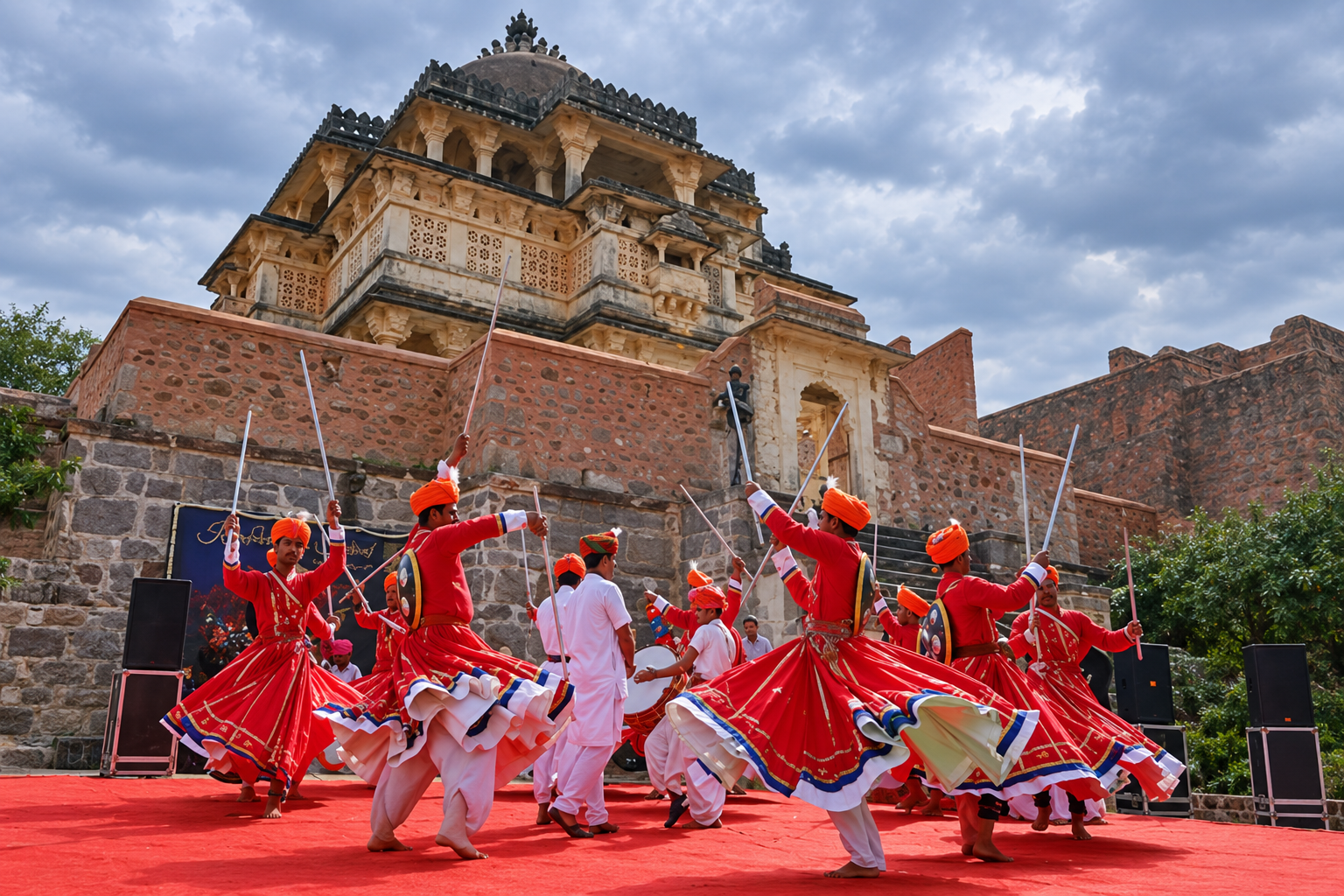
October to February — Winter, Peak Sightseeing Season
This is the best time to visit Mount Abu, with crisp days between 12°C and 20°C that suit long walks around Nakki Lake and unhurried visits to the Dilwara Temples. The Winter Festival runs from 29 to 31 December, bringing folk performances, a lamp-lit ceremony at the lake, and a lively close to the calendar year.
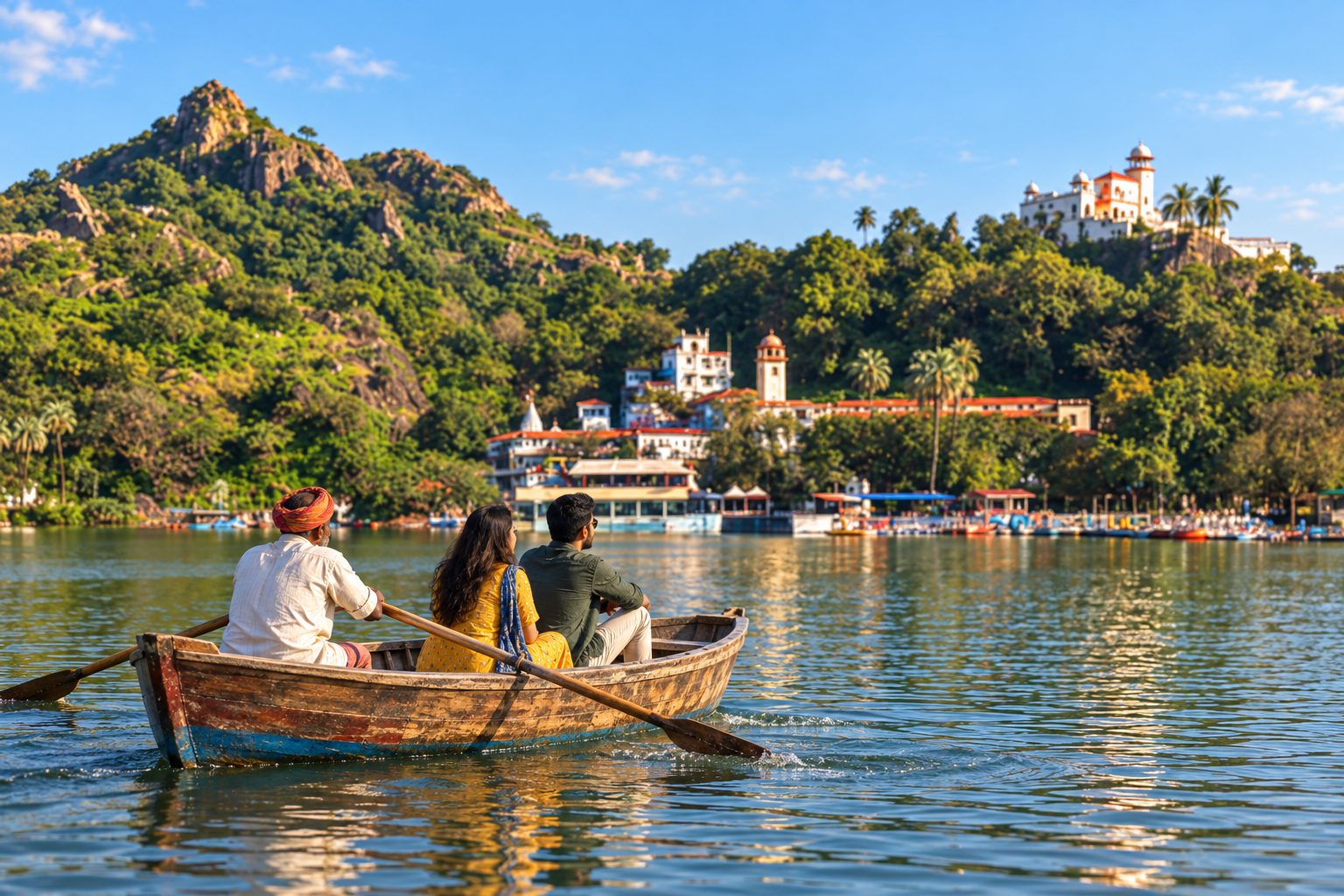
March to June — Summer, Rajasthan's Cool Retreat
While the rest of Rajasthan swelters, temperatures here stay a comfortable 25°C to 29°C, making this the season the hill station is best known for. Expect the biggest crowds of the year, since this is when families from across the state head up to the plateau to escape the heat.
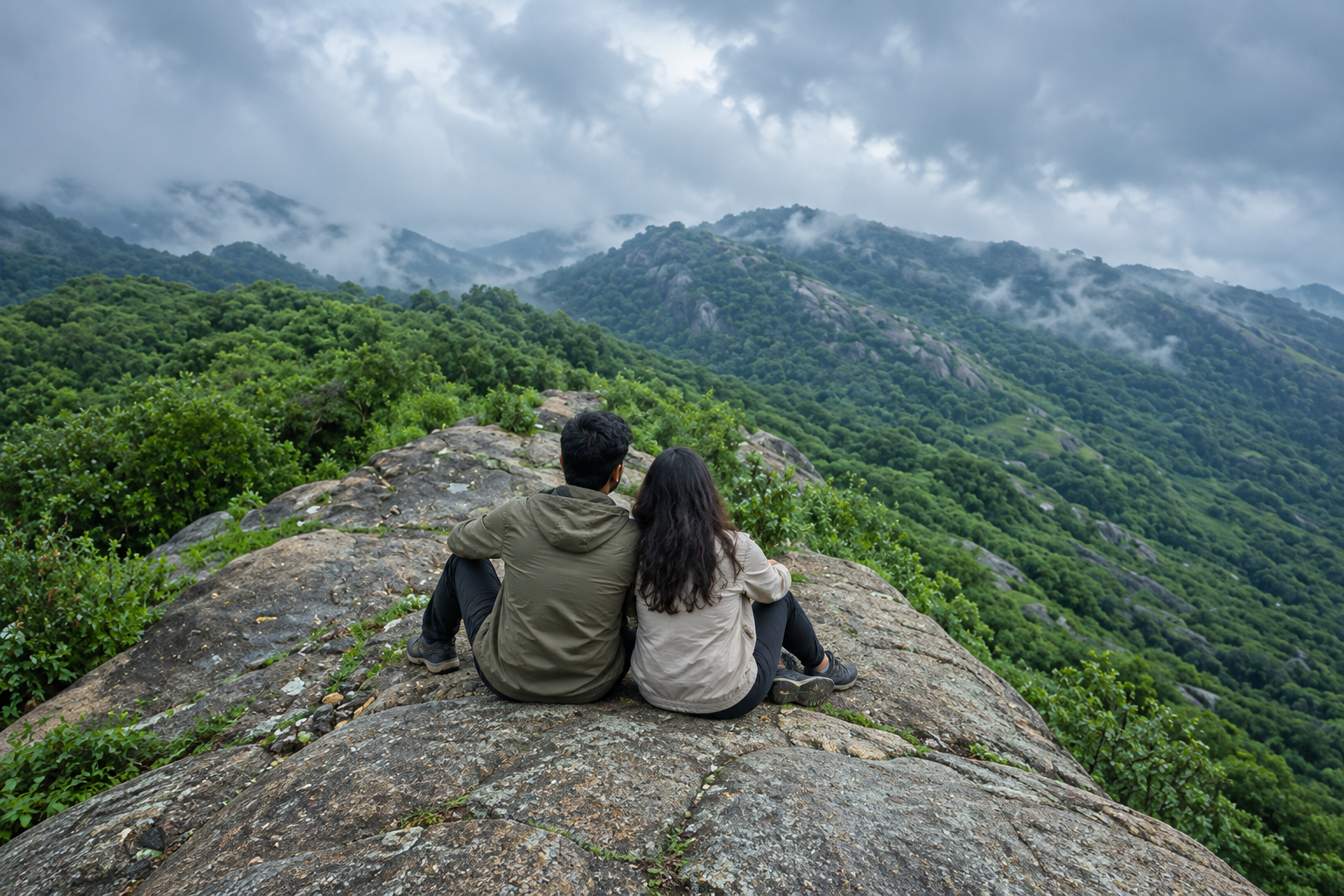
July to September — Monsoon, Misty and Green
The monsoon wraps the Aravalli slopes in cloud and turns the forest a deep green, with temperatures between 24°C and 29°C. Waterfalls swell and the town feels far quieter, though the ghat roads can turn slippery, so this season suits travellers who prioritise scenery over sightseeing convenience.
Travellers chasing clear skies and full access to every attraction should aim for the winter months, while those simply looking to escape the desert heat will find summer perfectly comfortable, if crowded. Anyone happy to trade a few sightseeing hours for quiet, misty hillsides can still enjoy a rewarding trip through the monsoon, provided the road conditions are checked in advance.