


Places to Visit in Tiruvannamalai for a Temple Town and Girivalam Trip
Set at the foot of a single sacred mountain in northern Tamil Nadu, Tiruvannamalai is one of South India’s oldest living pilgrimage towns and among the most searched names for anyone planning a spiritual trip in Tamil Nadu. Travellers researching the best places to visit in Tiruvannamalai usually begin with the Arunachaleswarar Temple, a 25-acre Shiva temple complex whose 217-foot eastern Rajagopuram is counted among the tallest temple towers in the country.
What sets this temple town apart is the hill itself : at Arunachala, the mountain is worshipped as a form of the deity rather than merely housing a shrine, which is why the town is described as one of the five Pancha Bhoota Stalas, representing the element of fire. The signature ritual here is Girivalam, the 14-km barefoot circumambulation of the hill undertaken on full moon days, passing eight lingams placed around the base. The town fills to capacity each Karthigai Deepam season between November and December, when a giant beacon is lit on the summit and can be seen for miles across the plains.
Seekers also make time for Sri Ramana Ashram, the home of the modern sage Ramana Maharishi, and for the meditation caves on the slope above it, Virupaksha Cave and Skandashram. Beyond the pilgrim circuit, the district rewards a longer stay, Gingee Fort, the hill fortress the British nicknamed the Troy of the East, sits around 44 km east, Sathanur Dam with its gardens and crocodile farm lies 34 km away on the Thenpennai river, the granite ridges of the Jawadhu Hills rise to the north with Beema Falls, Komutteri Lake and the Kavalur Observatory, and the steep Parvathamalai trek draws walkers to a summit shrine at roughly 4,500 feet. The 2,000-year-old Tirumalai Jain Temple adds a different layer of heritage.
Our Resort(s) at TIRUVANNAMALAI

Important Information
State: Tamil Nadu
District: Tiruvannamalai
Destination Type: Temple town and heritage destination
Nearest Airport: Chennai International Airport, approximately 179 km from Tiruvannamalai
Nearest Railway Station: Vellore Railway Station (93 km) and Tiruvannamalai Railway Station serves local and regional trains within the town
Road Connectivity: Well connected by the Krishnagiri to Tindivanam national highway (NH 77) and state highways, with direct road access from Chennai, Bengaluru, Puducherry, Vellore and Villupuram
Destinations Nearby: Gingee Fort, Sathanur Dam, Tirumalai Jain Temple, Jawadhu Hills and Parvathamalai
Languages: Tamil and English
Summer (March to May): Hot, climbing from around 21°C at dawn to 44°C by afternoon; pilgrims work around it with early mornings and late evenings
Monsoon (June to September): Rain gives the Arunachala slopes and countryside a fresher, greener look, with crowds thinning out considerably
Winter (October to February): The most comfortable window, roughly 14°C to 31°C, and peak pilgrimage season around Karthigai Deepam
● Book accommodation months in advance if visiting for Karthigai Deepam in November-December, when the town fills to capacity.
● The Girivalam walk is traditionally done barefoot on full moon nights; carry water, a torch, and comfortable footwear for the return stretch if you're not walking barefoot.
● Start temple visits before sunrise or after dusk in summer to avoid both the heat and the crowds.
● Modest, temple-appropriate clothing is expected at the Arunachaleswarar Temple and other shrines around town.
● Check local conditions before attempting the Parvathamalai trek during or right after the monsoon, when the route can turn slippery.
Quick Facts
Our Resort In Tiruvannamalai
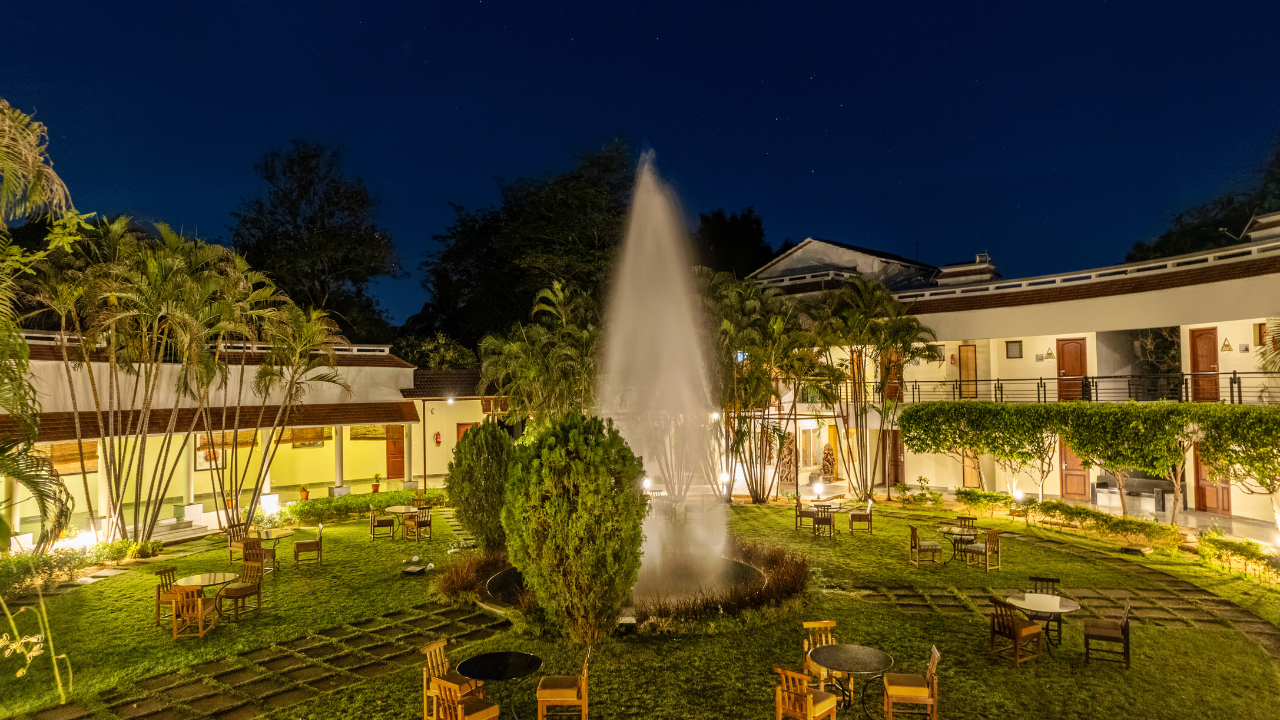
Sterling Arunai Anantha Tiruvannamalai
Spread across a 4-acre landscaped property with the sacred Arunachala hill framed in the background, this resort in Tiruvannamalai sits about 3.7 km from the Arunachaleswarar Temple and 2 km from Sri Ramana Ashram, which makes early morning darshan and a full-moon girivalam walk easy to plan. Guests settle into 30 contemporary rooms and suites, including mountain view rooms and spacious balcony categories going up to 470 sq ft. Dining is at Amutham, a pure vegetarian restaurant serving South and North Indian regional plates, Jain food options and Chinese and continental favourites. The property adds a swimming pool, a quiet corner for meditation, personalised yoga classes, guided treks and tour assistance, plus banquet halls that suit conferences, reunions and weddings.
Location And Information
State: Tamil Nadu
District: Tiruvannamalai
Destination Type: Temple town and heritage destination
Nearest Airport: Chennai International Airport, approximately 179 km from Tiruvannamalai
Nearest Railway Station: Vellore Railway Station (93 km) and Tiruvannamalai Railway Station serves local and regional trains within the town
Road Connectivity: Well connected by the Krishnagiri to Tindivanam national highway (NH 77) and state highways, with direct road access from Chennai, Bengaluru, Puducherry, Vellore and Villupuram
Destinations Nearby: Gingee Fort, Sathanur Dam, Tirumalai Jain Temple, Jawadhu Hills and Parvathamalai
Languages: Tamil and English
● Book accommodation months in advance if visiting for Karthigai Deepam in November-December, when the town fills to capacity.
● The Girivalam walk is traditionally done barefoot on full moon nights; carry water, a torch, and comfortable footwear for the return stretch if you're not walking barefoot.
● Start temple visits before sunrise or after dusk in summer to avoid both the heat and the crowds.
● Modest, temple-appropriate clothing is expected at the Arunachaleswarar Temple and other shrines around town.
● Check local conditions before attempting the Parvathamalai trek during or right after the monsoon, when the route can turn slippery.
Summer (March to May): Hot, climbing from around 21°C at dawn to 44°C by afternoon; pilgrims work around it with early mornings and late evenings
Monsoon (June to September): Rain gives the Arunachala slopes and countryside a fresher, greener look, with crowds thinning out considerably
Winter (October to February): The most comfortable window, roughly 14°C to 31°C, and peak pilgrimage season around Karthigai Deepam
Gallery


Best Time To Visit

October to February – Winter and Peak Pilgrimage Season
This is the most comfortable window for a Tiruvannamalai trip, with temperatures moving between roughly 14°C and 31°C and mornings cool enough for long temple queues and the full 14-km Girivalam route on foot. It also covers Karthigai Deepam in November or December, the biggest event on the town’s calendar, when the hilltop lamp is lit and millions of pilgrims arrive.

March to May – Summer and Quieter Temple Mornings
Summer runs hot on the plains, with the mercury climbing from around 21°C at dawn to 44°C in the afternoon. Pilgrims work around it by starting before sunrise and returning after dusk, which is also when the Arunachaleswarar Temple feels least crowded outside festival dates. Chitra Pournami in April or May brings a large full-moon gathering and a temple car procession.
June to September – Monsoon and Green Hill Slopes
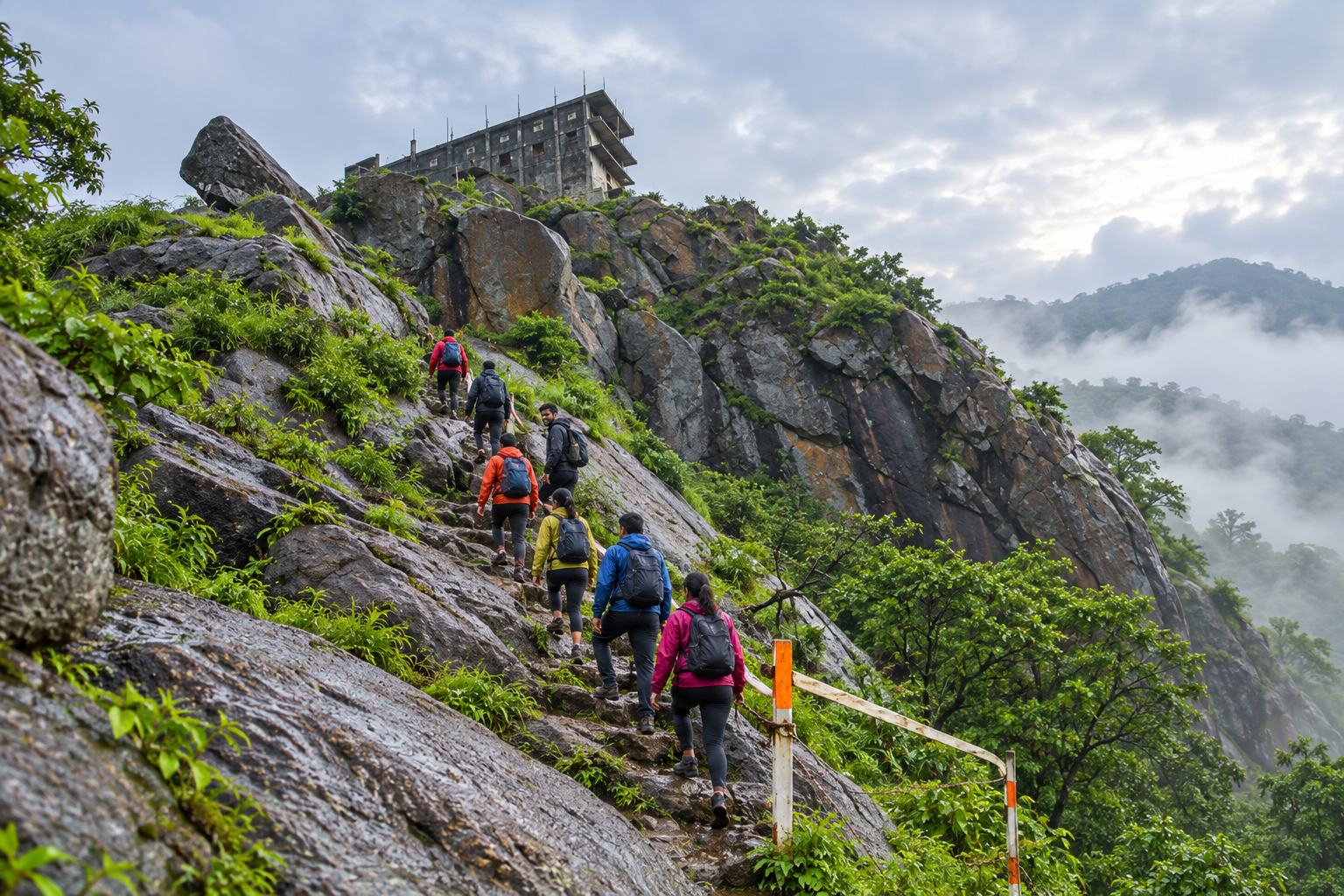
Rain arrives through these months and gives the Arunachala slopes and the surrounding countryside a fresher, greener look, with cloud drifting over the summit on many mornings. Crowds thin out, the Sathanur Dam catchment fills, and the Jawadhu Hills drives are at their most scenic.
For the best mix of weather and atmosphere, travel between October and February. Time the visit to a full moon day if the girivalam walk is the reason for the trip, and book months ahead if you want to be in town for Karthigai Deepam. Travellers who prefer a calmer, less crowded spiritual retreat will find the post-monsoon weeks of October pleasant, green and far easier on the schedule.