


Best Places to Visit in Badami for Cave Temples and Chalukya Heritage
Set against dramatic red sandstone cliffs in northern Karnataka, Badami ranks among the state's most rewarding heritage tourism destinations, and shows up often in searches for places to visit in Badami. Once called Vatapi, the town served as the capital of the early Chalukya dynasty between the 6th and 8th centuries CE, and that history is still carved directly into the hillside in the form of its famous rock-cut cave temples. Despite the weight of its past, Badami remains refreshingly uncrowded compared with better-known Karnataka circuits, making it a favourite for travellers who want history without the queues.
The town's centrepiece is the Badami Cave Temples, four rock-cut Hindu and Jain shrines on the UNESCO World Heritage Site, reached by a climb of stone steps that also opens onto views of Agastya Lake below. On the lake's opposite bank sits the Bhutanatha Temple, built in the Chalukyan style, while a steep trail leads up to Badami Fort for panoramic views over the town and surrounding cliffs. The same sandstone that shaped the caves has also made Badami one of India's better-known rock climbing destinations, with routes suited to both beginners and experienced climbers. A short drive extends the story further: Pattadakal, a UNESCO World Heritage Site about 21 km away, and Aihole, often called the cradle of Indian temple architecture, together hold well over a hundred temples between them, rounding out one of South India's densest heritage circuits.
A short drive from town, the Mahakuta group of temples adds another layer to the region's Chalukya story, with more than a dozen shrines built around a sacred spring-fed tank. Back in town, the Badami Archaeological Museum, run by the Archaeological Survey of India, houses Lajja-Gauri sculptures, ancient coins and inscriptions recovered from across the district, giving useful context to everything carved into the cliffs outside. Local kitchens add their own flavour to the trip too, with jolada rotti, enne badnekayi and other North Karnataka staples rounding out a visit that runs on food and history in equal measure.
Our Resort(s) at BADAMI

Important Information
State: Karnataka
District: Bagalkot
Destination Type: Heritage
Nearest Airport: Hubli Airport, about 115 km away
Nearest Railway Station: Badami Railway Station in town; Yaragoppa station, about 2.6 km from the resort, is the closer halt
Road Connectivity: Well connected via NH67 and state highways linking Hubli, Belagavi and Bagalkot
Languages: Hindi and English
Summer (March to June):Very hot, between 20°C and 39°C, with peak afternoons occasionally climbing higher; the most physically demanding season for sightseeing
Monsoon (July to September): Hot and humid with moderate rainfall, since Bagalkot district sees less monsoon activity than coastal Karnataka
Winter (October to February): Pleasant and cool, between 15°C and 22°C; the most comfortable season for temple visits and rock climbing
● Visit the Badami Cave Temples early in the morning, especially between October and February, to avoid both the heat and the midday crowds.
● Wear sturdy, non-slip footwear; the climb up to the caves and Badami Fort involves several flights of uneven stone steps.
● Carry water and sun protection even in winter, since afternoons can still turn warm on the exposed sandstone.
● Combine your visit with day trips to Pattadakal and Aihole to complete the full Chalukya heritage circuit in one trip.
● If attempting the rock climbing routes on Badami's cliffs, hire a trained local guide or instructor, particularly if you're new to the sport.
Quick Facts
Our Resort In Badami
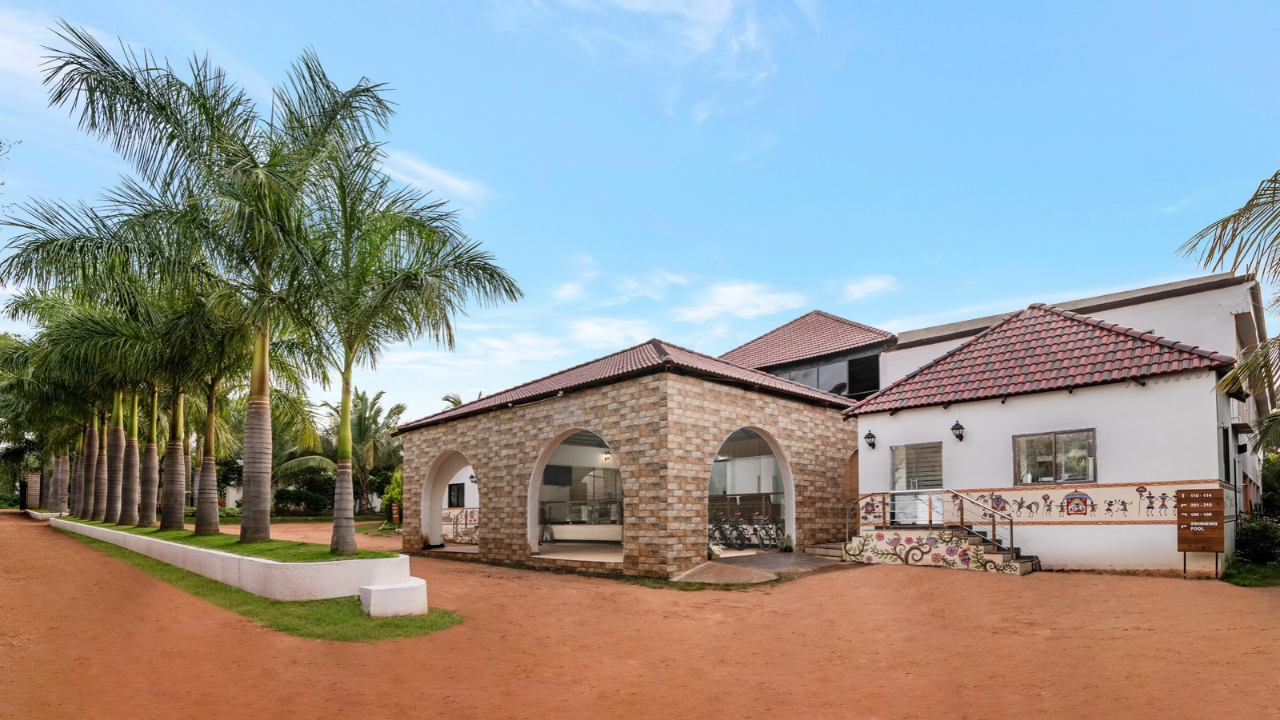
Sterling Banashree Badami
Set on 10 acres of preserved greenery about 7.3 km outside town, Sterling Banashree Badami trades the bustle of the cave temples for a quieter, nature-facing stay. The property holds 23 cottages and premier rooms, among the most spacious in the wider Hubli-Badami region, with garden-view cottages set among rows of frangipani trees and private sit-outs that look straight onto the resort's greenery. Guests can dine at Vatapi, the resort's multi-cuisine restaurant known for its Saoji specialities alongside Indian and global favourites, or book the private Gazebo for a small gathering under the stars, with Badami's cave temples, Pattadakal and Aihole all reachable on a day trip from the resort.
Location & Information
State: Karnataka
District: Bagalkot
Destination Type: Heritage
Nearest Airport: Hubli Airport, about 115 km away
Nearest Railway Station: Badami Railway Station in town; Yaragoppa station, about 2.6 km from the resort, is the closer halt
Road Connectivity: Well connected via NH67 and state highways linking Hubli, Belagavi and Bagalkot
Languages: Hindi and English
● Visit the Badami Cave Temples early in the morning, especially between October and February, to avoid both the heat and the midday crowds.
● Wear sturdy, non-slip footwear; the climb up to the caves and Badami Fort involves several flights of uneven stone steps.
● Carry water and sun protection even in winter, since afternoons can still turn warm on the exposed sandstone.
● Combine your visit with day trips to Pattadakal and Aihole to complete the full Chalukya heritage circuit in one trip.
● If attempting the rock climbing routes on Badami's cliffs, hire a trained local guide or instructor, particularly if you're new to the sport.
Summer (March to June):Very hot, between 20°C and 39°C, with peak afternoons occasionally climbing higher; the most physically demanding season for sightseeing
Monsoon (July to September): Hot and humid with moderate rainfall, since Bagalkot district sees less monsoon activity than coastal Karnataka
Winter (October to February): Pleasant and cool, between 15°C and 22°C; the most comfortable season for temple visits and rock climbing
Best Time to Visit
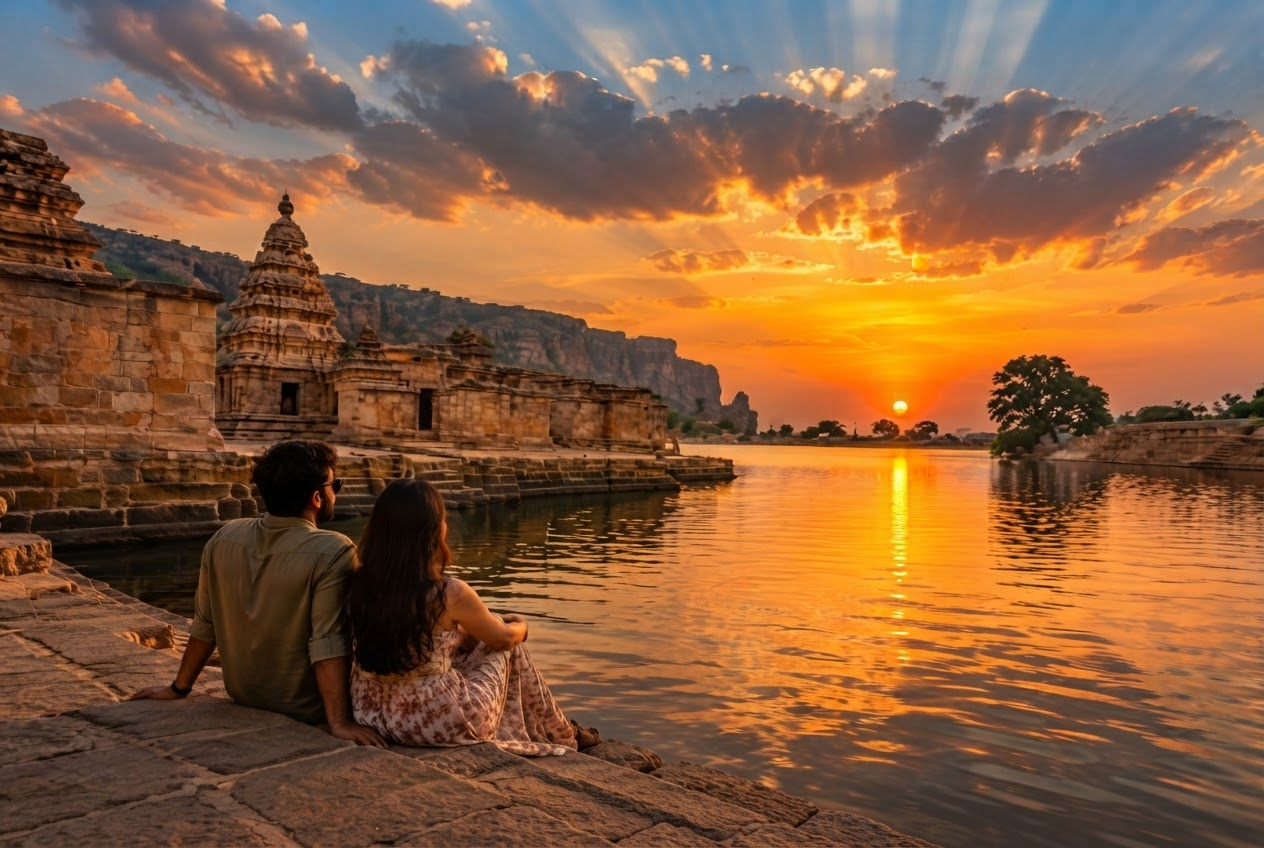
October to February – Winter & Peak Sightseeing Season
Winter is widely considered the best time to visit Badami, with temperatures settling between 15°C and 22°C. Cooler mornings make the climb to the cave temples and Badami Fort far more comfortable, and this stretch also sees the steadiest conditions for rock climbing on the sandstone cliffs.

March to June – Summer & Peak Heat
Summer brings Badami's harshest weather, with temperatures climbing from 20°C to 39°C and higher on peak afternoons. Sightseeing is best done early in the day, with the exposed sandstone cliffs and stone steps around the caves turning uncomfortably hot by midday.
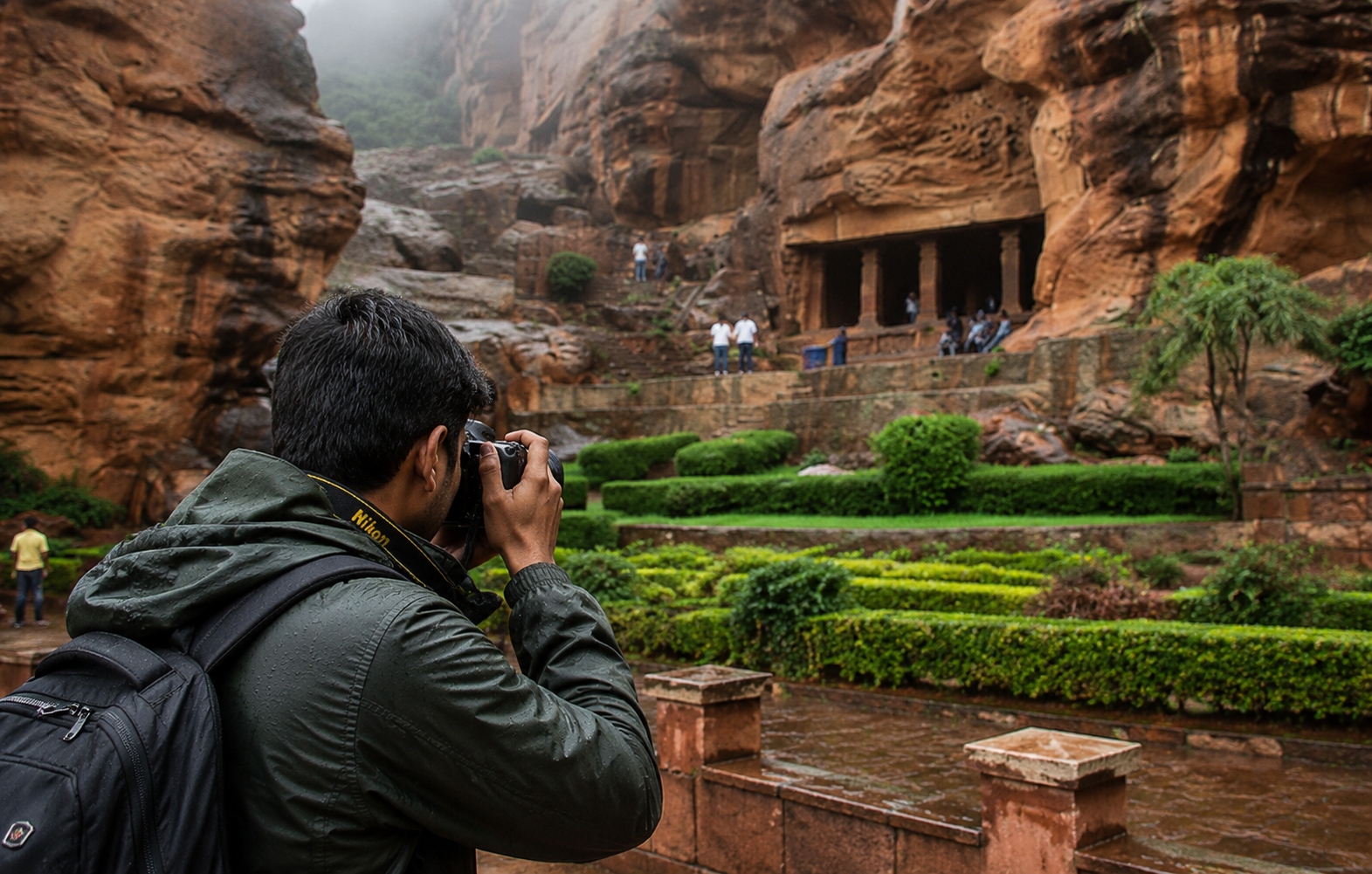
July to September – Monsoon & Quieter Months
The monsoon brings hot, humid weather with moderate rainfall, since this part of Karnataka lies in a drier belt than the coast. Fewer tourists visit during this stretch, which suits travellers happy to trade cooler mornings for quieter cave temples and open climbing routes.
Gallery


