


Best Places to Visit in Gangtok for Monastery Trails and Himalayan Views
Perched at an elevation of around 1,650 metres in the eastern Himalayan foothills, Gangtok is Sikkim's capital and one of Northeast India's most searched hill destinations for monastery tourism and mountain views. Anyone researching the best places to visit in Gangtok will find a compact hill town where Buddhist, Nepali, Sikkimese and Bhutia influences sit side by side, with clear-day views stretching to Kanchenjunga, the world's third-highest peak. For travellers planning a Sikkim holiday and searching for Gangtok sightseeing options, the town doubles as a base and the gateway to the state's high-altitude lakes and mountain passes.
A typical list of things to do in Gangtok starts with its monasteries and viewpoints. Local legend traces the town's roots to a wandering lama who set up a hilltop hermitage that grew into the Enchey Monastery, still known for its January Cham mask dance. A short drive further out, Tsomgo Lake, also called Changu Lake, sits frozen for much of the year and now has a cable car for closer views, while permit-holders can continue on to Nathula Pass on the historic Indo-China Silk Route. Closer to town, Rumtek Monastery, the largest in Sikkim, the golden-domed Do Drul Chorten stupa, and the Namgyal Institute of Tibetology add cultural depth, while MG Marg, the town's pedestrian-only high street, the botanical trails of Saramsa Garden, and viewpoints like Hanuman Tok, Ganesh Tok and Tashi View Point round out a typical Gangtok sightseeing loop.
Sikkim's Buddhist calendar shapes much of the year here, with Losar, the Tibetan New Year, drawing locals to monasteries such as Rumtek and Enchey in February or March, and Saga Dawa in May marking Buddha's birth, enlightenment and death with processions along MG Marg. Add in the region's love of momos, thukpa and locally brewed tongba, a warm fermented-millet drink native to the hills, and Gangtok comes across less as a single sight to check off and more as a slow, cultural immersion best paired with an equally relaxed stay.
Our Resort(s) at GANGTOK

Important Information
State: Sikkim
District: Gangtok
Destination Type: Mountain / Hill Station
Destinations Nearby: Darjeeling 108 km, Siliguri 115 km, Kolkata 670 km
Nearest Sterling Resort: Sterling Darjeeling
Languages: Sikkimese, Nepali, Bhutia, Lepcha, Hindi and English
Nearest Railway Station: New Jalpaiguri Railway Station (broad gauge), about 117 km away
Nearest Airport: Pakyong Airport, about 27 km away, with limited weather-dependent flights; Bagdogra Airport, about 123 km away, offers wider connectivity
Road Connectivity: Well connected via NH10 from Siliguri and Darjeeling, and further linked to Kolkata and the rest of Northeast India
Summer (March to June): Pleasant, averaging around 22°C; the most comfortable stretch for sightseeing and monastery visits
Monsoon (July to September): Heavy rainfall with landslide-prone hill roads; a quieter, greener season with fewer tourists
Winter (November to February): Cold, with minimum temperatures between 4°C and 7°C, and occasional snow at higher points such as Tsomgo Lake
● Foreign nationals need an Inner Line Permit to visit Gangtok and the rest of Sikkim, usually arranged through a travel agent or at the Rangpo entry checkpoint.
● Additional permits are required for restricted areas such as Tsomgo Lake and Nathula Pass, regardless of nationality.
● Explore MG Marg and central Gangtok on foot; it is a pedestrian-only stretch and one of the more walkable town centres in the hills.
● Remove footwear before entering monasteries and temples, and avoid touching anyone's head, since it is considered sacred in Buddhist tradition.
● Consider a helicopter ride for an aerial view of the town and the Kanchenjunga range on a clear day.
QUICK FACTS
OUR RESORT IN GANGTOK
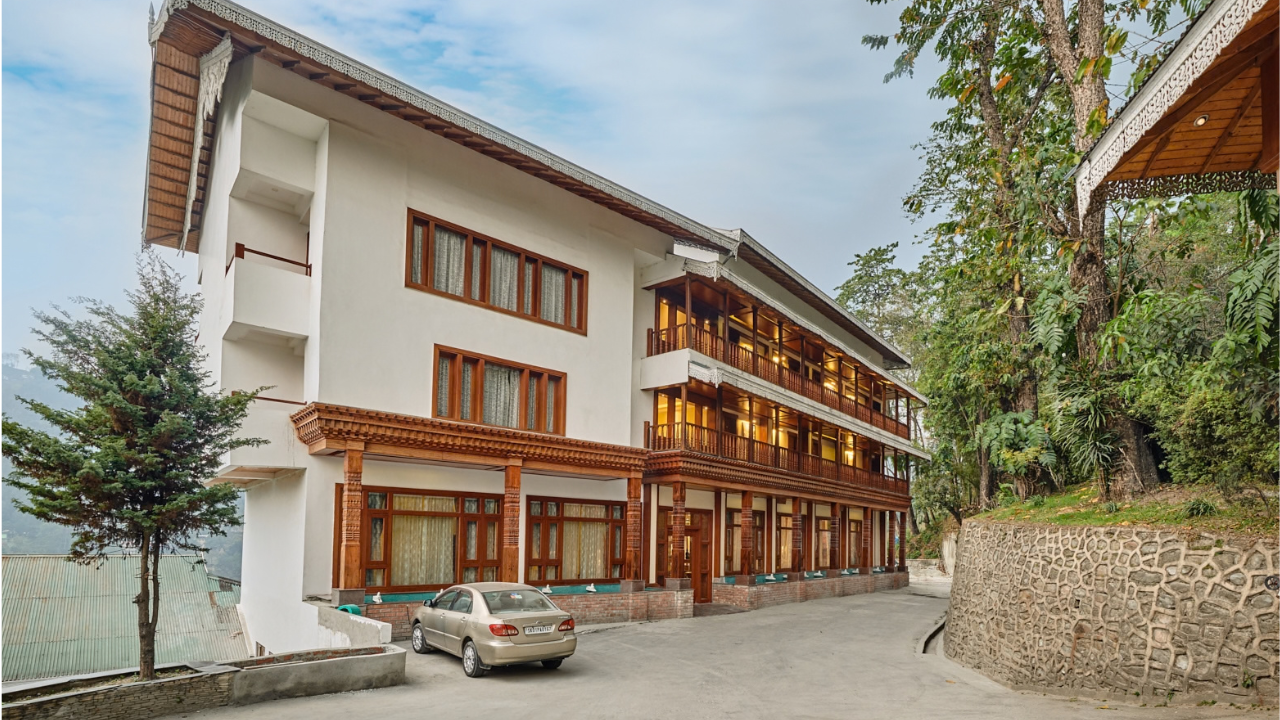
Sterling Gangtok - Orange Village
Set among orange orchards on the banks of the Rani Khola river, Sterling Gangtok - Orange Village is a 56-room resort built for a quieter, garden-facing stay away from the town centre. Rooms are finished with teak wood flooring and open onto private balconies, with most categories framing a valley view of the surrounding hills. Beyond the rooms, guests can dine on Nepali, Tibetan, Bhutanese and Lepcha specialities at the all-day Suntaley Chulo restaurant, unwind over drinks at its bar, wander the landscaped orchard grounds, or make use of the resort's conference hall for meetings, reunions and small events. Its position inside the orchard also keeps Banjhakri Waterfalls, MG Road and the Gangtok Ropeway within easy reach for a day out.

Sterling Mount Olive Gangtok
Set in the Development Area of Upper Sichey, opposite Manan Kendra, Sterling Mount Olive Gangtok is a 31-room boutique hotel built for guests who want the town's sights close at hand. Rooms come in Classic, Valley View, Valley View with Balcony and Valley View Premier room with Balcony categories, with several opening onto private balconies and Himalayan valley views. Guests can try traditional Tibetan cuisine alongside a multi-cuisine menu at the Latitude 27 resto-bar, which has live band evenings on Fridays and Saturdays.
LOCATION & INFORMATION
State: Sikkim
District: Gangtok
Destination Type: Mountain / Hill Station
Destinations Nearby: Darjeeling 108 km, Siliguri 115 km, Kolkata 670 km
Nearest Sterling Resort: Sterling Darjeeling
Languages: Sikkimese, Nepali, Bhutia, Lepcha, Hindi and English
Nearest Railway Station: New Jalpaiguri Railway Station (broad gauge), about 117 km away
Nearest Airport: Pakyong Airport, about 27 km away, with limited weather-dependent flights; Bagdogra Airport, about 123 km away, offers wider connectivity
Road Connectivity: Well connected via NH10 from Siliguri and Darjeeling, and further linked to Kolkata and the rest of Northeast India
● Foreign nationals need an Inner Line Permit to visit Gangtok and the rest of Sikkim, usually arranged through a travel agent or at the Rangpo entry checkpoint.
● Additional permits are required for restricted areas such as Tsomgo Lake and Nathula Pass, regardless of nationality.
● Explore MG Marg and central Gangtok on foot; it is a pedestrian-only stretch and one of the more walkable town centres in the hills.
● Remove footwear before entering monasteries and temples, and avoid touching anyone's head, since it is considered sacred in Buddhist tradition.
● Consider a helicopter ride for an aerial view of the town and the Kanchenjunga range on a clear day.
Summer (March to June): Pleasant, averaging around 22°C; the most comfortable stretch for sightseeing and monastery visits
Monsoon (July to September): Heavy rainfall with landslide-prone hill roads; a quieter, greener season with fewer tourists
Winter (November to February): Cold, with minimum temperatures between 4°C and 7°C, and occasional snow at higher points such as Tsomgo Lake
Best Time to Visit
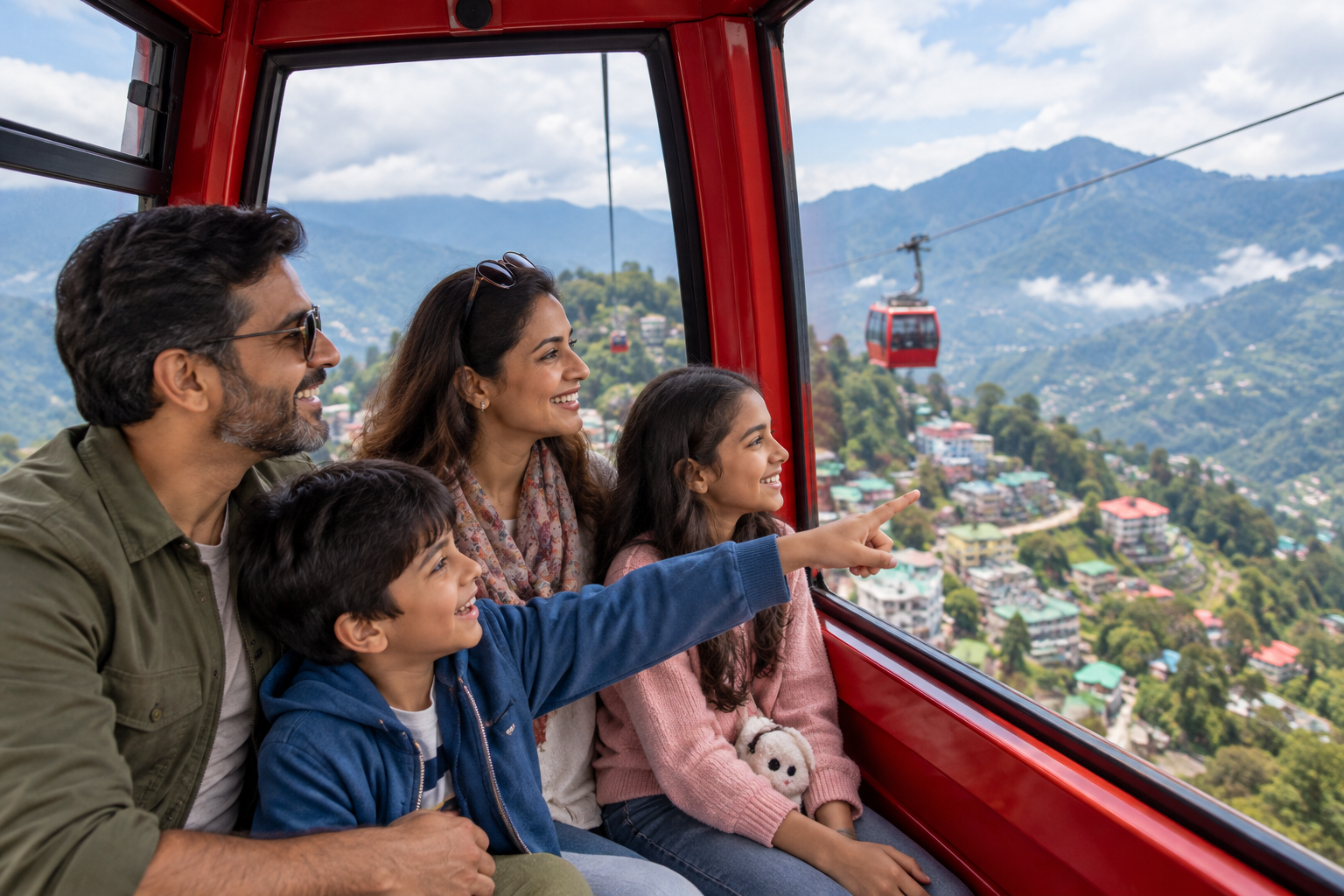
March to June – Summer & Clear Mountain Views
Summer is Gangtok's most popular season, with a comfortable average of 22°C and generally clear skies that favour views of Kanchenjunga. This window also lines up with the Flower Exhibition Centre's peak bloom in May, making it an easy stretch for monastery visits, cable car rides and day trips towards Tsomgo Lake.
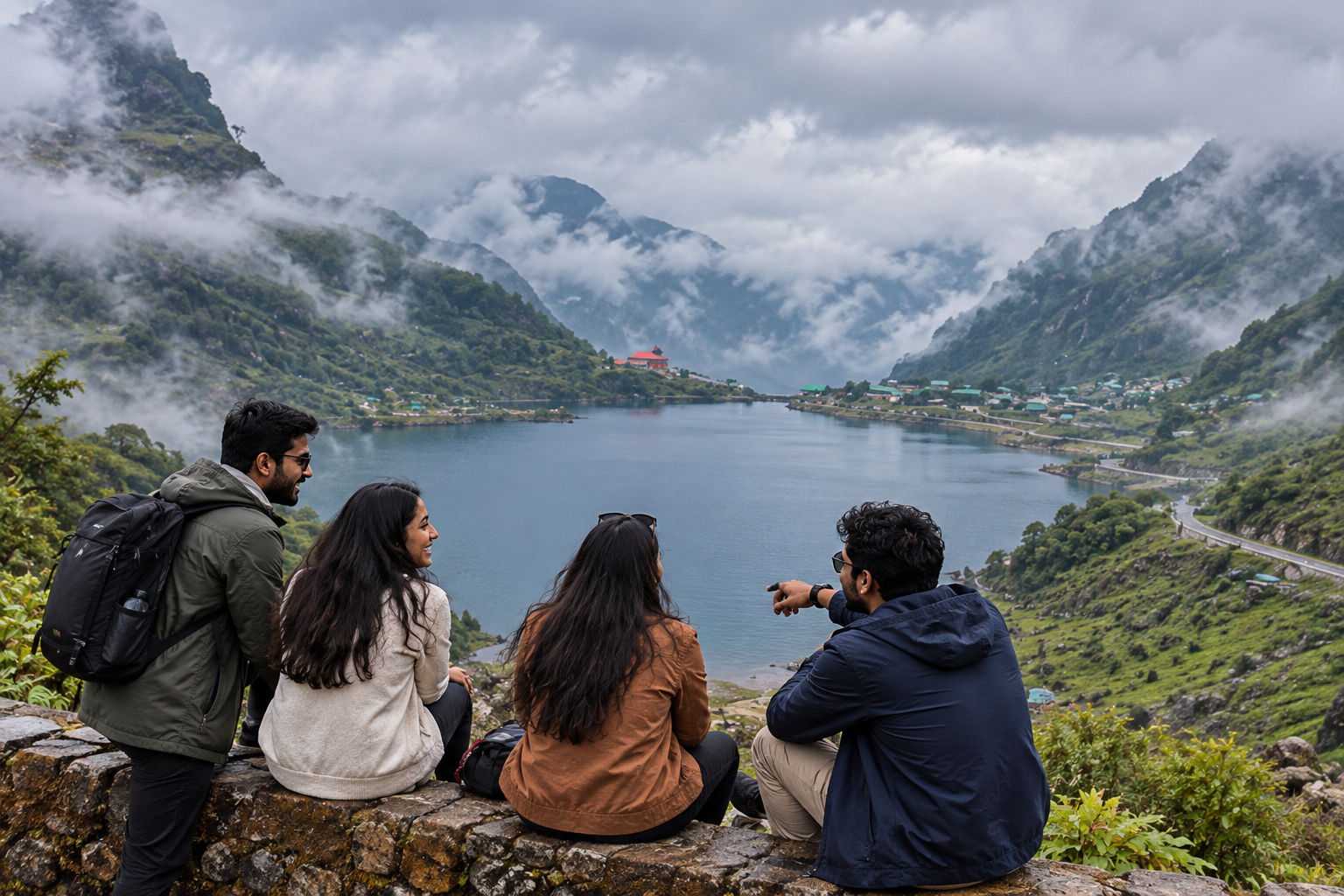
July to September – Monsoon & Quiet Green Hills
The monsoon brings heavy rain and mist across the hills, turning the terraced slopes around town a deep green. Hill roads can turn landslide-prone during this stretch, so it suits travellers who prefer a quieter, indoor-friendly pace over long day excursions to the higher passes.
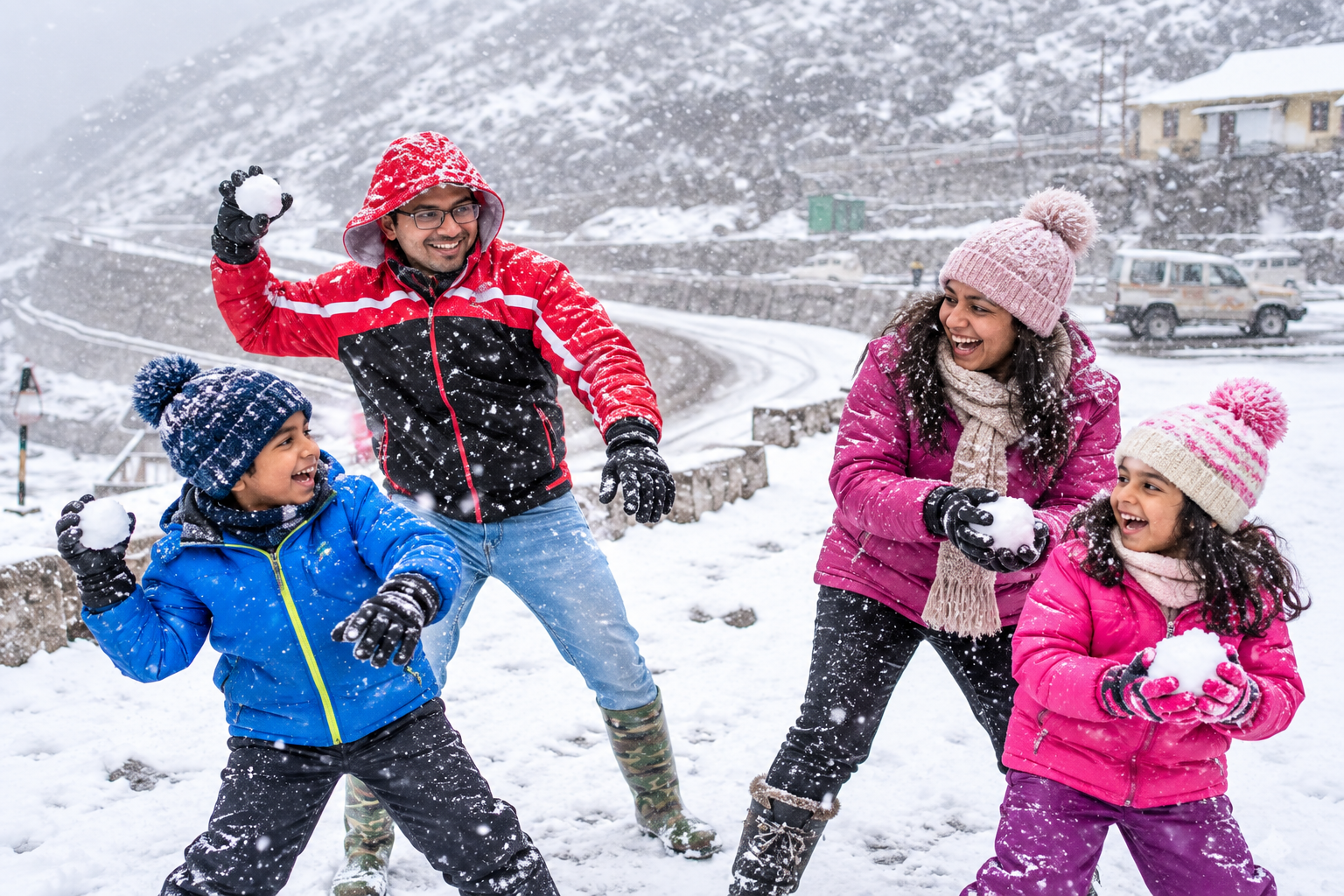
November to February – Winter & Snow-Season Charm
Winter brings a cold, crisp climate with minimum temperatures dropping to between 4°C and 7°C, and occasional snowfall at higher points such as Tsomgo Lake. This is the season for a classic mountain-town feel, with fewer crowds than summer but colder conditions for outdoor sightseeing.
For clear mountain views and the widest range of open excursions, the summer months of March to June are the strongest choice. Travellers who don't mind cooler days and want a quieter, more atmospheric visit can pick the winter stretch of November to February, while those comfortable with rain and fewer crowds may enjoy the monsoon months of July to September for a lush, misty version of the hills.
Gallery


