


Best Places to Visit Near Gir National Park for Asiatic Lion Safaris and Gujarat Heritage Trails
Synonymous with the Asiatic lion, Sasan Gir has become one of Gujarat's most searched wildlife destinations for travellers researching places to visit in Gir beyond a typical safari holiday. The forested hills of the Gir National Park and Wildlife Sanctuary, spread across roughly 1,412 sq km in the Kathiawar peninsula, remain the last wild refuge of the Asiatic lion anywhere outside Africa, a conservation story that has pulled the big cat back from under 200 individuals decades ago to several hundred today. For anyone planning a Gir tourism itinerary, the destination pairs jungle safaris with pilgrim towns, forts and coastline that rarely make it onto a first-time visitor's list.
Beyond the roar of the forest, the region opens up into temples, forts and beaches within a short drive of Sasan Gir. The pilgrim town of Somnath, home to the revered Somnath Temple and one of the twelve Jyotirlinga shrines, sits about 44 km away, while the hillside town of Junagadh brings together the Uparkot Fort, its ancient stepwells and the ropeway ride up Girnar Hill. Birdwatchers head to Kamleshwar Dam for sightings of marsh crocodiles and waterfowl, and the coastal town of Diu, with its Portuguese-era churches and quieter beaches, makes for an easy extension to a Gir wildlife trip.
History and nature continue to overlap through the region, from the hot water springs at Tulsi Shyam and the forest shrine of Kankai Mata Temple to the sandy stretches of Madhavpur Beach and Sarkeshwar Beach further along the Gujarat coast. The Durbar Hall Museum in Junagadh and the Indo-Islamic Mahabat Maqbara complex add a dose of Nawabi history to a trip built mostly around wildlife. Whether the plan is a lion safari or a longer Saurashtra circuit, Gir works well as the anchor point for a Gujarat holiday that mixes forest trails with temple towns and coastal detours.
Our Resort(s) at GIR

Important Information
State: Gujarat
District: Gir Somnath / Junagadh
Destination Type: Wildlife & Forest
Nearest Airport: Diu Airport (about 96 km); Rajkot Airport (about 190 km)
Nearest Railway Station: Veraval Railway Station, about 41 km from the resort
Road Connectivity: Well connected via state highways from Junagadh, Veraval and Rajkot
Languages: Gujarati, Hindi and English
Summer (March to May): Hot and dry, between 28°C and 48°C; safaris are best planned at dawn or dusk.
Monsoon (June to October): The core Gir safari zone stays closed to visitors; heavy rain around 28°C keeps the forest lush.
Winter (November to February): Cool and pleasant, between 10°C and 22°C; the peak season for clear wildlife sightings.
• Book Gir National Park safari permits well in advance online, since morning slots in winter sell out within hours.
• Carry light layers for early morning safaris, since winter mornings in the forest can be surprisingly cold despite Gujarat’s warm days.
• Plan safari visits for early morning or late afternoon in summer, when lions are more likely near waterholes despite the heat.
• Avoid planning a Gir trip between mid-June and mid-October, since the core safari zone closes for the monsoon and breeding season.
• Combine a Gir stay with a day trip to Somnath Temple or Diu, both easily reached within half a day’s drive.
Quick Facts
Our Resort in Gir
Sterling Gir
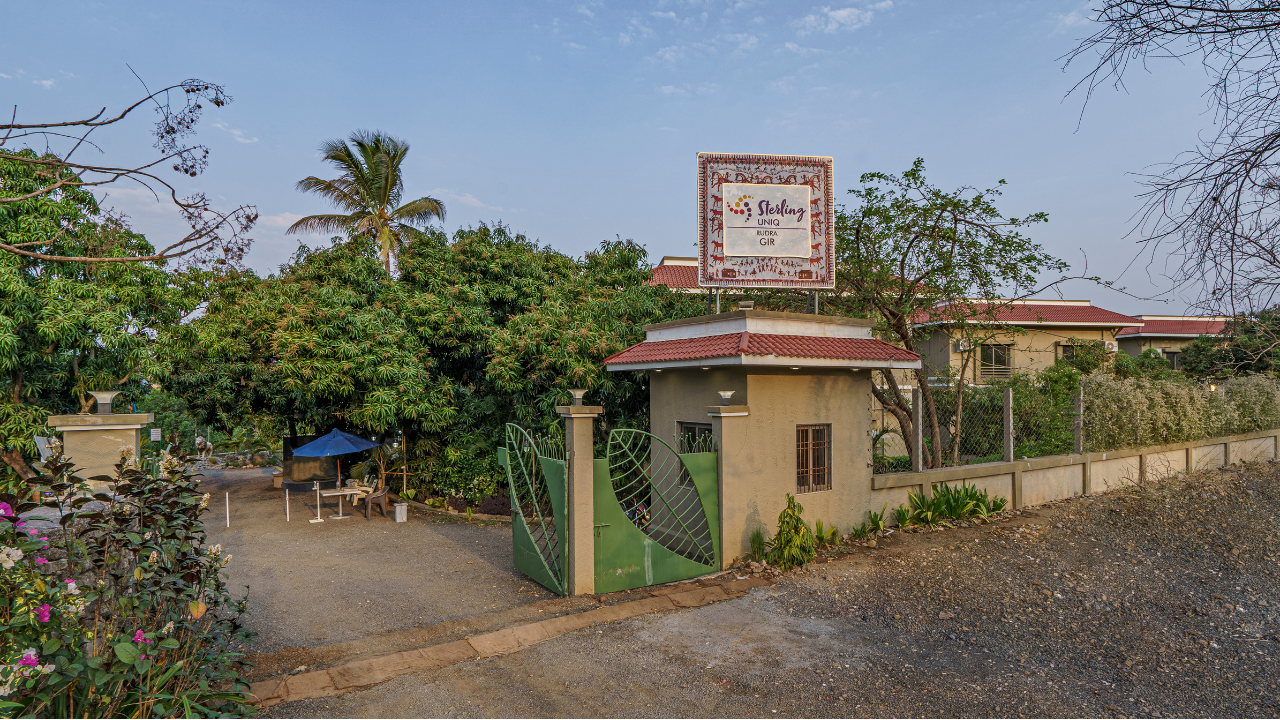
Sterling Gir is a 7-acre resort set among a mango orchard on the banks of the Hiran River, with 26 air-conditioned rooms that include cottages inspired by the traditional Kuba huts of Kutch. Most rooms open onto garden-facing views of the orchard and surrounding greenery, while a few come with private balconies for a quieter outlook over the grounds. The in-house Hiren Kinaro restaurant, run out of a dedicated vegetarian kitchen, serves Kathiawadi cuisine and Gujarati satvik food, and the resort's own Sterling Safari Assistance desk helps guests book Gir National Park permits and plan jungle safaris without the usual hassle.
Location And Information
State: Gujarat
District: Gir Somnath / Junagadh
Destination Type: Wildlife & Forest
Nearest Airport: Diu Airport (about 96 km); Rajkot Airport (about 190 km)
Nearest Railway Station: Veraval Railway Station, about 41 km from the resort
Road Connectivity: Well connected via state highways from Junagadh, Veraval and Rajkot
Languages: Gujarati, Hindi and English
• Book Gir National Park safari permits well in advance online, since morning slots in winter sell out within hours.
• Carry light layers for early morning safaris, since winter mornings in the forest can be surprisingly cold despite Gujarat’s warm days.
• Plan safari visits for early morning or late afternoon in summer, when lions are more likely near waterholes despite the heat.
• Avoid planning a Gir trip between mid-June and mid-October, since the core safari zone closes for the monsoon and breeding season.
• Combine a Gir stay with a day trip to Somnath Temple or Diu, both easily reached within half a day’s drive.
Summer (March to May): Hot and dry, between 28°C and 48°C; safaris are best planned at dawn or dusk.
Monsoon (June to October): The core Gir safari zone stays closed to visitors; heavy rain around 28°C keeps the forest lush.
Winter (November to February): Cool and pleasant, between 10°C and 22°C; the peak season for clear wildlife sightings.
Gallery


Best Time To Visit
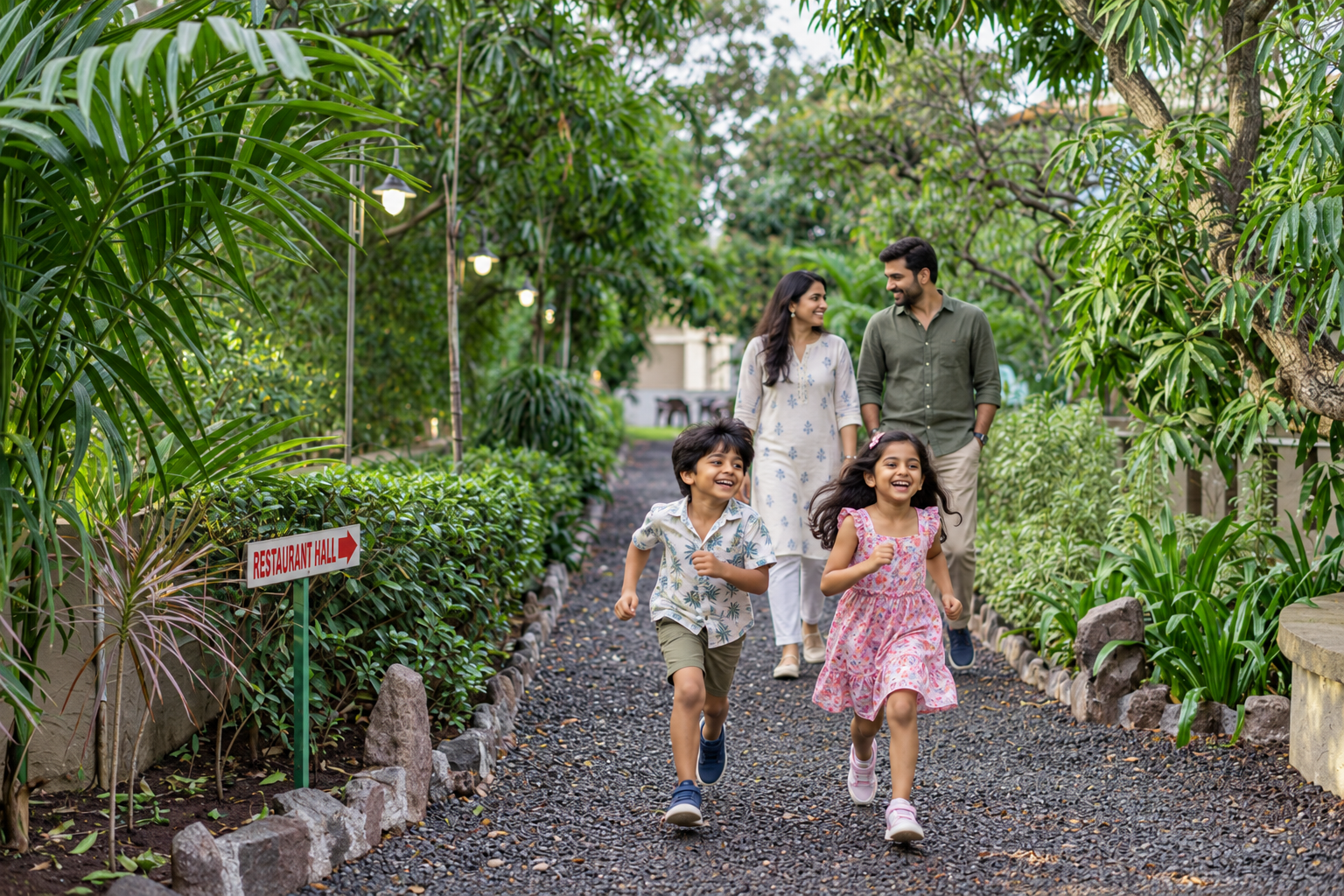
November to February – Winter & Peak Safari Season
Winter brings Gir its most comfortable weather, with temperatures between 10°C and 22°C making early-morning jungle safaris especially pleasant. Cooler air keeps wildlife more active during daylight hours, improving the odds of spotting the Asiatic lion along with leopards, deer and the region's rich birdlife. This is also the busiest season, so permits and resort stays are best booked several weeks ahead.
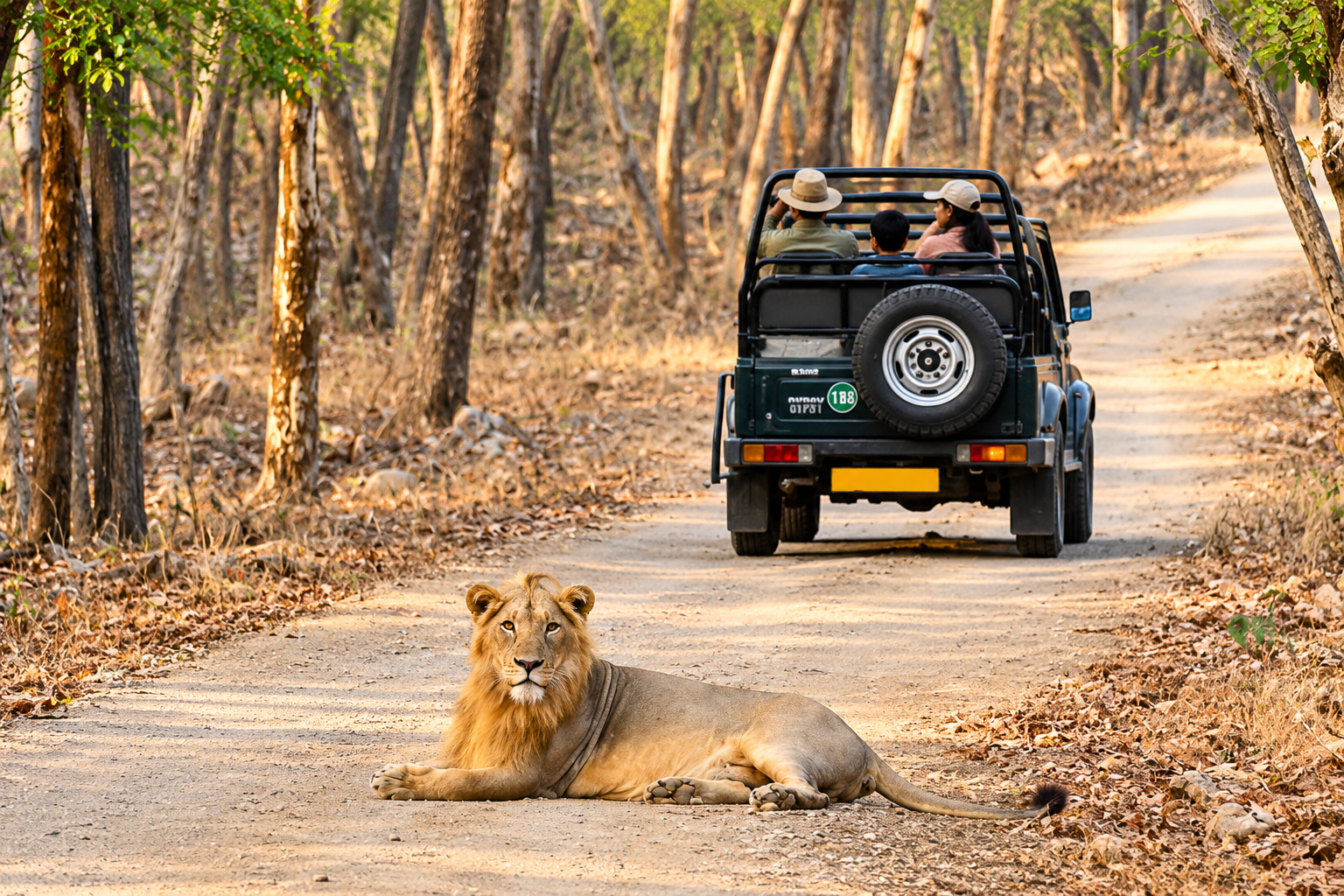
March to May – Summer & Waterhole Season
Summer turns hot and dry, with temperatures climbing as high as 48°C, but the heat pushes lions and other wildlife toward waterholes, often making sightings easier despite the discomfort. Early morning and late afternoon safaris are the best way to beat the midday sun while still catching strong wildlife activity. Crowds thin out compared to winter, which suits travellers chasing a quieter safari experience.
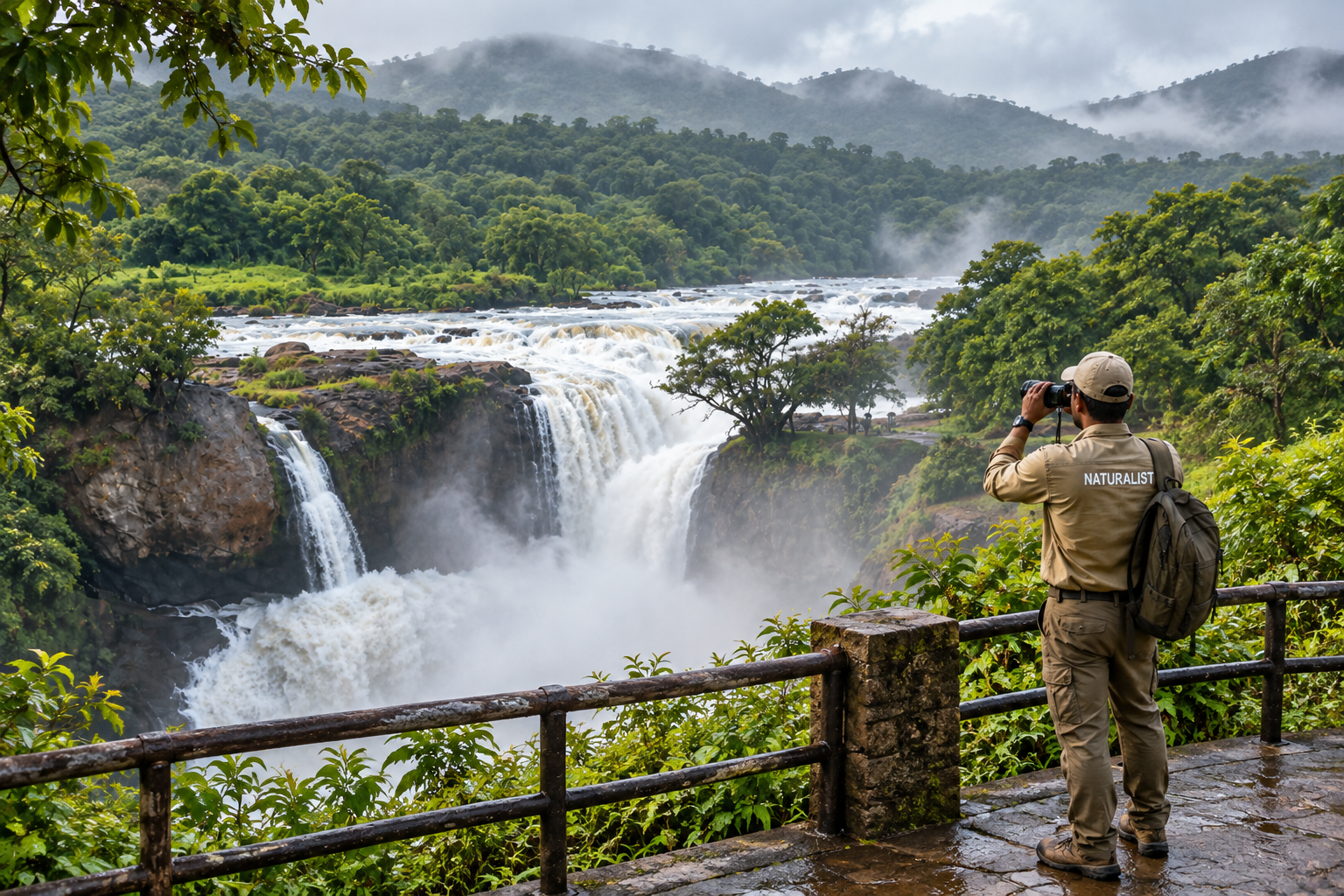
June to October – Monsoon & Park Closure
The core Gir National Park safari zone closes to visitors from mid-June to mid-October, giving the forest and its lions an undisturbed breeding season. Heavy rain turns the region green, though the main jungle trail remains off-limits throughout this window. Travellers visiting during these months can still explore Somnath Temple, Junagadh's heritage sites or Diu's beaches while the park stays shut.
For the most comfortable safaris and the best overall wildlife sightings, the winter months of November to February are the best time to visit Gir. Travellers chasing waterhole action despite the heat can consider summer, from March to May, while a trip between mid-June and mid-October should be planned around Somnath, Junagadh or Diu rather than the closed safari zone.