


Best Places to Visit in Kanha for Tiger Safaris,Barasingha and Wildlife Experiences
Kanha,spread across the Mandla and Balaghat districts of Madhya Pradesh, ranks among the most searched names for travellers researching places to visit for a wildlife holiday. Anchored in the Maikal range of the Satpura hills, Kanha National Park is the largest national park in the state and one of India's flagship tiger reserves, with a core zone of close to 940 sq km ringed by an extensive buffer of towering Sal and bamboo forest. For anyone exploring Kanha tourism, the destination pairs a genuinely high probability of tiger sightings with a landscape so evocative that it inspired Rudyard Kipling to write The Jungle Book after his travels through this belt of central India.
The reserve's headline attraction is naturally the Bengal tiger, but its rolling meadows are just as famous for the Barasingha, or hard-ground swamp deer, the state animal of Madhya Pradesh that was brought back from the edge of extinction through decades of dedicated conservation work; Kanha was, in fact, the first park in India to adopt an official mascot, Bhoorsingh the Barasingha, to raise awareness about the species. Jungle safaris into the core area through the Khatia (Kisli), Mukki, and Sarhi gates bring sightings of leopards, gaur, wild dogs, and langur moving between sal groves and open grassland, while Bamni Dadar, the highest plateau in the reserve, is loved as the park's classic sunset point.
History and nature come together at the Kanha Museum near Kisli gate, and the destination sits within comfortable driving distance of Mandla town, Jabalpur city, and the neighbouring Pench and Bandhavgarh tiger reserves. Whether it is a first safari or a repeat visit in search of a tiger sighting, Kanha's blend of dense sal forest, open meadows, and one of central India's healthiest tiger populations makes it one of the most rewarding wildlife destinations in Madhya Pradesh to build a getaway around.
Our Resort(s) at KANHA

Important Information
State: Madhya Pradesh
District: Mandla and Balaghat districts
Destination Type: Jungle / Wildlife Reserve
Destinations Nearby: Jabalpur (143 km), Mandla (52 km), Nagpur (252 km), Raipur (221 km)Languages: Hindi and English
Nearest Airport: Jabalpur Airport (154 km from the resort)
Nearest Railway Station: Gondia Railway Station (148 km) and Jabalpur Railway Station (141 km)
Road Connectivity: Well connected by road to Jabalpur, Nagpur, and Raipur via state and national highways, with the resort able to arrange transfers on request
Languages: Hindi and English
Summer(March to June): Hot and dry, climbing to around 43°C by May and June; the best window for tiger sightings as animals gather near shrinking waterholes
Monsoon(July to mid-October): Heavy rainfall of around 1,800 mm; the core zone stays closed to safaris, so this suits travellers happy to skip the jungle drives
Winter(October to February): Cool and pleasant by day with nights occasionally near freezing in December and January; the most reliable season for safaris
● The core zone stays closed from around 1 July to 15 October each year for the monsoon, so safaris aren't possible during this stretch.
● Book jeep safari permits in advance, especially for the October to February peak season, as slots at Khatia (Kisli), Mukki and Sarhi gates fill up quickly.
● Carry warm layers for early-morning winter safaris, when temperatures can dip close to freezing in December and January.
● Choose your entry gate based on where you're travelling from: Mukki is easier from Nagpur or Raipur, while Khatia and Sarhi are more convenient from Jabalpur.
● If a tiger sighting is the priority, plan for March to June, when dwindling waterholes draw animals into the open, and carry sun protection for the midday heat.
Quick Facts
Our Resort at Kanha
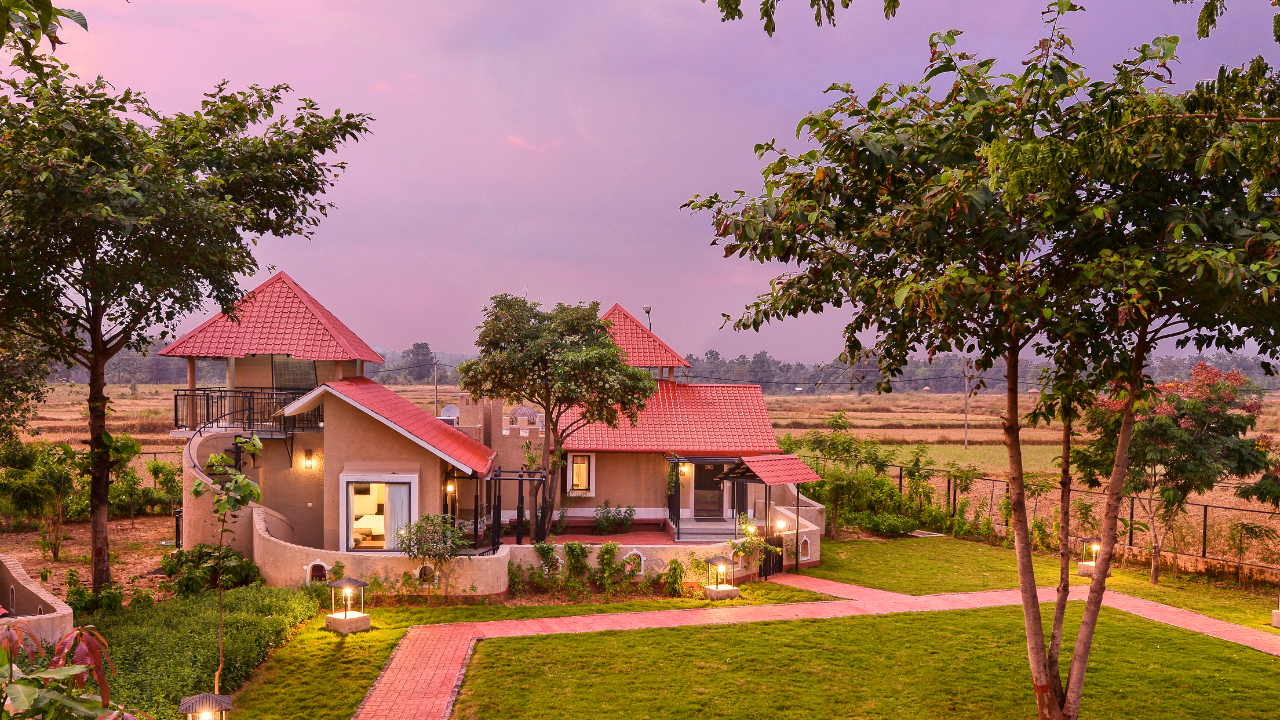
Sterling Kanha
Tucked away in the quiet village of Mocha and shaded by towering Sal trees, Sterling Kanha is an 8.5-acre jungle resort just 5.7 km from Kanha National Park, making it one of the most convenient resorts near Kanha National Park for an early-morning safari. The property's 25 rooms span traditionally styled Privilege Suites with open Shower and Machan, premier rooms with balcony, and classic tents with sit out, all designed to keep guests close to the surrounding forest. The in-house multi-cuisine restaurant Taste of Jungle serves signature local delicacies like Aloo Dal Badi and Urad Dal Ki Subji are sure to tantalise your taste buds, all served with beautiful views of the pond.
Location And Information
State: Madhya Pradesh
District: Mandla and Balaghat districts
Destination Type: Jungle / Wildlife Reserve
Destinations Nearby: Jabalpur (143 km), Mandla (52 km), Nagpur (252 km), Raipur (221 km)Languages: Hindi and English
Nearest Airport: Jabalpur Airport (154 km from the resort)
Nearest Railway Station: Gondia Railway Station (148 km) and Jabalpur Railway Station (141 km)
Road Connectivity: Well connected by road to Jabalpur, Nagpur, and Raipur via state and national highways, with the resort able to arrange transfers on request
Languages: Hindi and English
● The core zone stays closed from around 1 July to 15 October each year for the monsoon, so safaris aren't possible during this stretch.
● Book jeep safari permits in advance, especially for the October to February peak season, as slots at Khatia (Kisli), Mukki and Sarhi gates fill up quickly.
● Carry warm layers for early-morning winter safaris, when temperatures can dip close to freezing in December and January.
● Choose your entry gate based on where you're travelling from: Mukki is easier from Nagpur or Raipur, while Khatia and Sarhi are more convenient from Jabalpur.
● If a tiger sighting is the priority, plan for March to June, when dwindling waterholes draw animals into the open, and carry sun protection for the midday heat.
Summer(March to June): Hot and dry, climbing to around 43°C by May and June; the best window for tiger sightings as animals gather near shrinking waterholes
Monsoon(July to mid-October): Heavy rainfall of around 1,800 mm; the core zone stays closed to safaris, so this suits travellers happy to skip the jungle drives
Winter(October to February): Cool and pleasant by day with nights occasionally near freezing in December and January; the most reliable season for safaris
Gallery


Best Time To Visit
For the most reliable safari experience and the widest range of sightings, plan a visit between mid October and February. If a tiger sighting tops your list, the hotter months of March to June, just before the park closes for monsoon, tend to offer better odds as animals gather around dwindling water sources.