


Best Places to Visit in Pushkar for Sacred Lake Darshan and Camel Fair Experiences
Cradled by theAravalli hills in the Ajmer district of Rajasthan, this ancient temple town is one of India's most visited pilgrimage destinations and a name that consistently tops any search for places to visit in Pushkar. Legend holds that Lord Brahma dropped a lotus here, giving the town its name, and its sacred Pushkar Lake, ringed by 52 ghats, has made this one of Hinduism's oldest pilgrimage circuits. For travellers researching Rajasthan tourism, the destination offers a rare combination: an ancient spiritual centre, a desert-edge landscape, and a festival calendar that draws visitors from across the world.
The town's defining landmark is the Brahma Temple, among the very few temples in the world dedicated to the creator god, standing just steps from the lake and drawing devotees for its evening aarti ceremony. A short ropeway or a climb of nearly a thousand steps up Ratnagiri Hill leads to the Savitri Mata Temple, which opens out to a sweeping view of the town, its lake, and the surrounding desert. Other notable shrines worth exploring include the Varaha Temple, the Rangji Temple with its distinctive South Indian architecture, the Gayatri Mata Temple, and the lakeside Man Mahal, a former royal guesthouse overlooking the lake.
Beyond its temples, this holy town is famed worldwide for the annual Pushkar Camel Fair, also called the Kartik Mela, when the plains beyond the town fill with traders, decorated camels, and folk performances building up to the holy dip on Kartik Purnima. Whether it is a sunrise walk along the ghats, a camel safari across the nearby sand dunes, a hot air balloon ride over the desert plains, or an evening browsing the colourful bazaars for silver jewellery and Bandhani textiles, this desert temple town rewards travellers who want spirituality, culture, and adventure within the same compact itinerary.
Our Resort(s) at PUSHKAR

Important Information
State: Rajasthan
District: Ajmer
Destination Type: Heritage & Pilgrimage Town
Nearest Airport: Jaipur International Airport(about 147 km from Pushkar)
Nearest Railway Station: Pushkar Railway Station, with Ajmer Junction (about 15 km away) as the main rail head with wider connectivity
Road Connectivity: Well connected via NH48 and NH58 from Jaipur and Ajmer, and easily reached from Udaipur and Jodhpur by road
Languages: Hindi and English
Summer (March to June): Hot and dry, with daytime temperatures often between 30°C and 40°C, occasionally touching 45°C in peak summer
Monsoon (July to September): Brief and moderate rainfall with higher humidity; temperatures generally range between 25°C and 35°C
Winter (October to February): The most pleasant season, with daytime temperatures between 20°C and 25°C and cold nights that can dip close to freezing in December and January
● Pushkar is a sacred vegetarian town where meat, eggs, and alcohol are not served or sold within town limits, so plan meals accordingly.
● Cover your shoulders and knees before entering temples, and be prepared to remove shoes, bags, and cameras before entering the Brahma Temple complex.
● Book accommodation well in advance if travelling during the Pushkar Camel Fair in October or November, as the town fills up quickly and room rates rise sharply during this period.
● Carry sun protection and stay hydrated during the day even in the cooler months, since the desert sun remains strong through the afternoon.
● Bargain politely while shopping in the Main Bazaar for silver jewellery, textiles, and handicrafts, and settle taxi or camel safari rates in advance.
● Evenings can turn cool even in the warmer months given the desert climate, so pack a light layer for the lakeside aarti and after-dark strolls.
Quick Facts
Our Resort In Pushkar
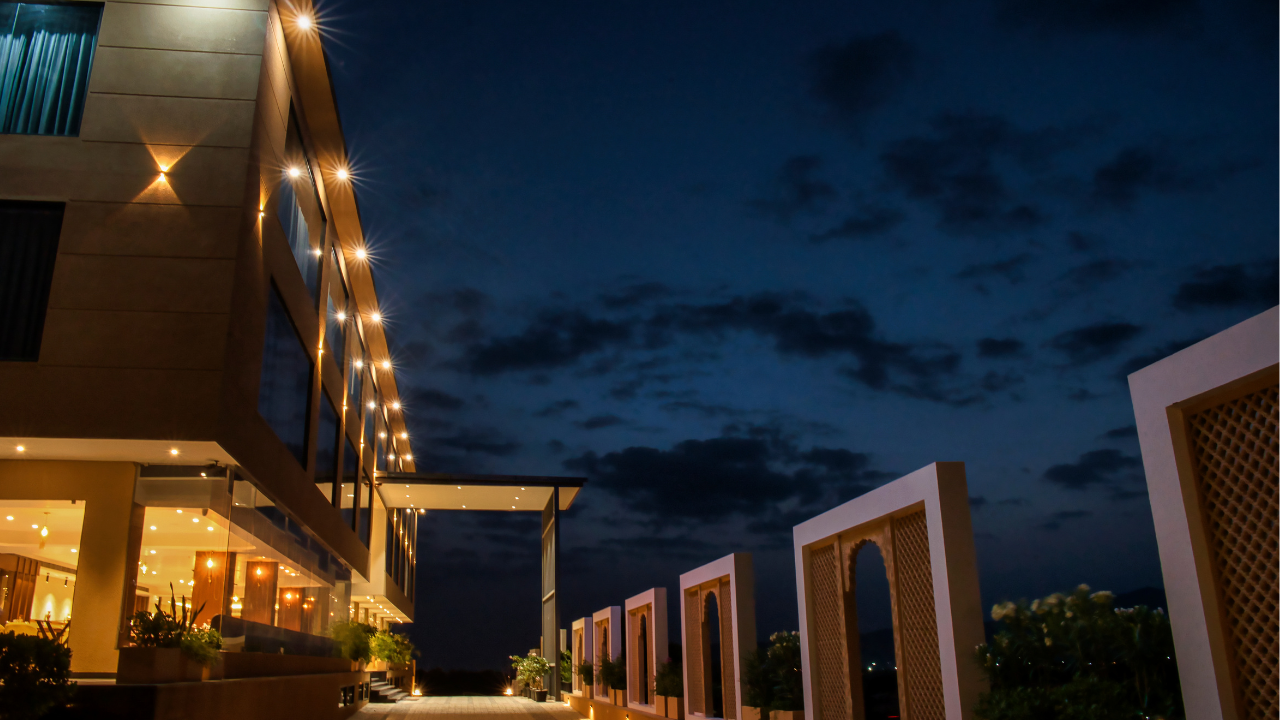
Sterling Pushkar
Set against the Aravalli range in this 2,000-year-old temple town, Sterling Pushkar is a 35-room resort positioned within easy reach of the biggest local draws. Rooms range from cosy Classic Rooms and Mountain View Classic Rooms overlooking the Aravalli hills to more spacious Premier Rooms with a private sit-out for soaking in the view, and the Privilege Suite, finished in elegant wooden flooring with large windows. Guests can dine at Masala Magic, the resort's pure-vegetarian restaurant serving Rajasthani specialities like Dal Bati Churma and Gatta Curry alongside international favourites. With a sprawling 32,000 sq. ft. lawn for weddings and events, and easy access to camel safaris and sand dune rides, the resort anchors Sterling's Rajasthan circuit alongside its sister properties in Udaipur and Mount Abu.
Location & Information
State: Rajasthan
District: Ajmer
Destination Type: Heritage & Pilgrimage Town
Nearest Airport: Jaipur International Airport(about 147 km from Pushkar)
Nearest Railway Station: Pushkar Railway Station, with Ajmer Junction (about 15 km away) as the main rail head with wider connectivity
Road Connectivity: Well connected via NH48 and NH58 from Jaipur and Ajmer, and easily reached from Udaipur and Jodhpur by road
Languages: Hindi and English
● Pushkar is a sacred vegetarian town where meat, eggs, and alcohol are not served or sold within town limits, so plan meals accordingly.
● Cover your shoulders and knees before entering temples, and be prepared to remove shoes, bags, and cameras before entering the Brahma Temple complex.
● Book accommodation well in advance if travelling during the Pushkar Camel Fair in October or November, as the town fills up quickly and room rates rise sharply during this period.
● Carry sun protection and stay hydrated during the day even in the cooler months, since the desert sun remains strong through the afternoon.
● Bargain politely while shopping in the Main Bazaar for silver jewellery, textiles, and handicrafts, and settle taxi or camel safari rates in advance.
● Evenings can turn cool even in the warmer months given the desert climate, so pack a light layer for the lakeside aarti and after-dark strolls.
Summer (March to June): Hot and dry, with daytime temperatures often between 30°C and 40°C, occasionally touching 45°C in peak summer
Monsoon (July to September): Brief and moderate rainfall with higher humidity; temperatures generally range between 25°C and 35°C
Winter (October to February): The most pleasant season, with daytime temperatures between 20°C and 25°C and cold nights that can dip close to freezing in December and January
Gallery


Best Time To Visit
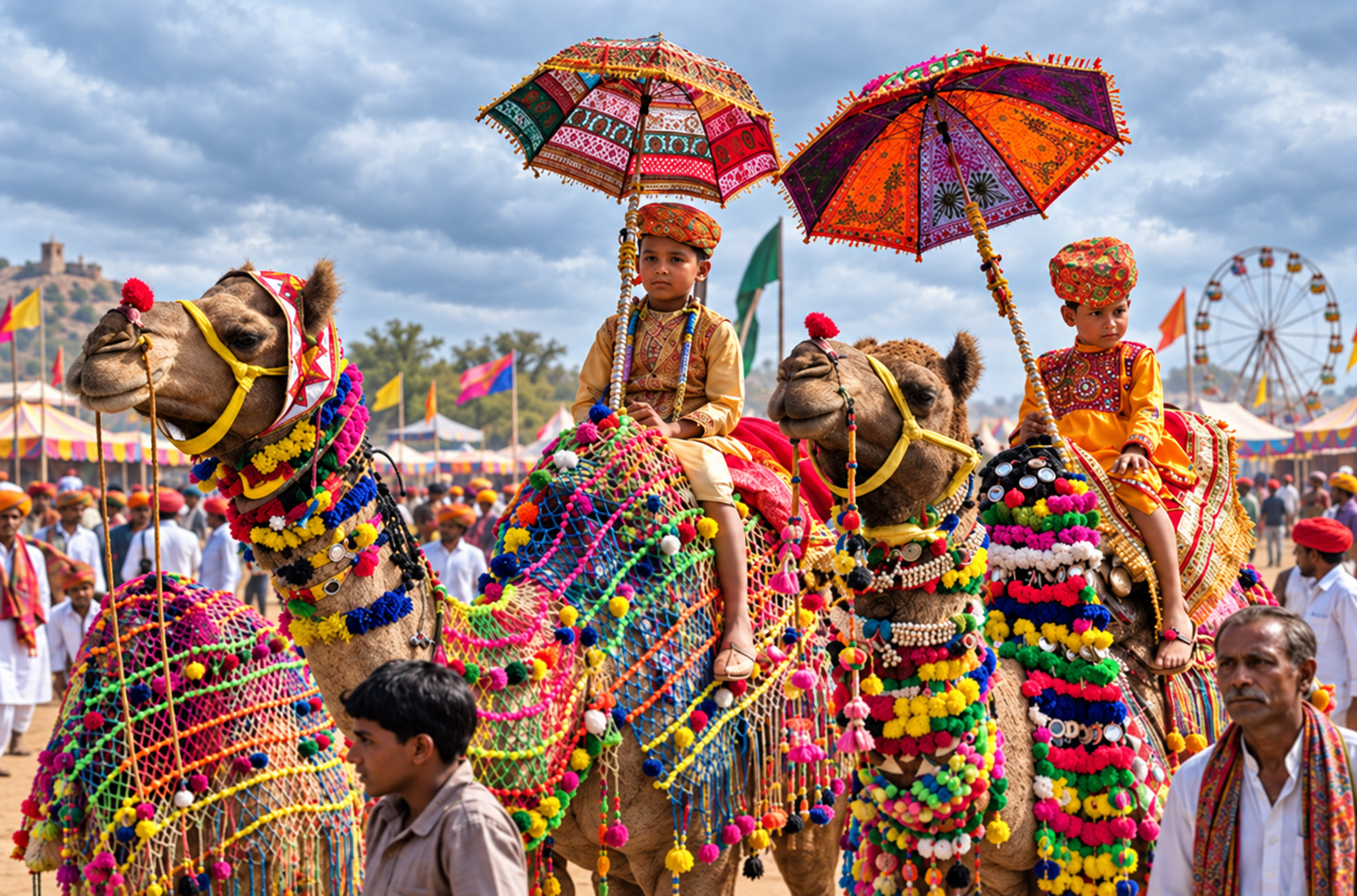
October to February - Winter, Peak Pilgrimage Season
This is the best time to visit Pushkar, when daytime temperatures settle between a comfortable 20°C and 25°C and nights turn crisp. It is also when the town hosts its biggest draw, the Pushkar Camel Fair, timed to the Hindu month of Kartik and culminating in the holy bathing ritual on Kartik Purnima. Expect crowded ghats, lively bazaars, and the best conditions for temple visits, camel safaris, and sightseeing around the lake.
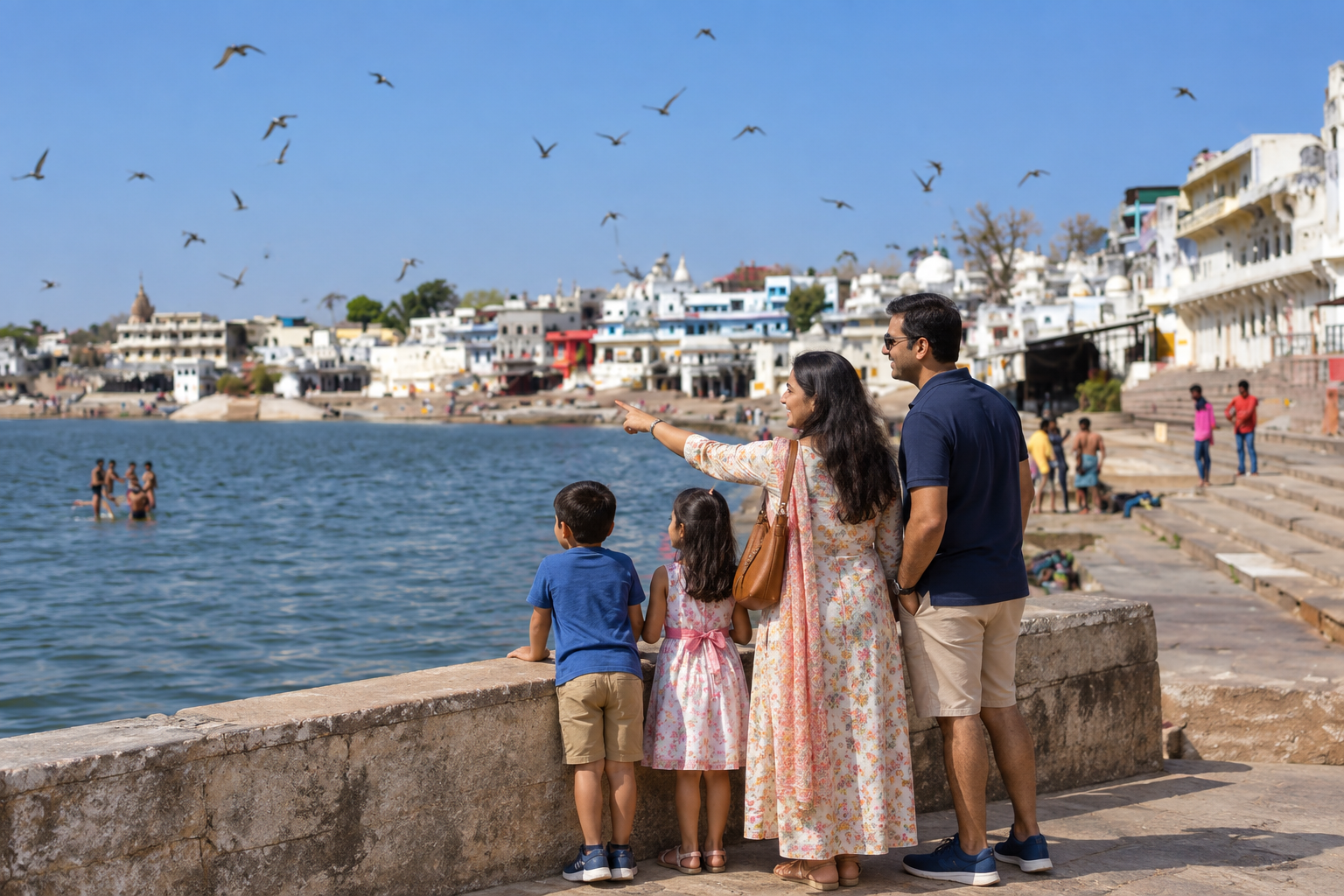
March to June - Summer, Hot and Quiet
Summer brings dry desert heat, with temperatures climbing from around 30°C in March to over 40°C by May and June. Sightseeing is best kept to early mornings and evenings during this stretch, though the town is noticeably quieter, hotel rates are lower, and the lakeside aarti and shaded temple courtyards offer some respite from the midday sun.

July to September - Monsoon, Moderate and Green
The monsoon brings intermittent showers and a welcome drop in temperature, with the desert landscape around the town turning a rare shade of green. Rainfall is moderate compared to other parts of India, and humidity rises, but this off-season window suits travellers who prefer fewer crowds and don't mind occasional showers disrupting outdoor plans.
For the most comfortable Pushkar Rajasthan trip, plan a visit between October and February, when the weather is pleasant and the town's temples, ghats, and bazaars are easiest to explore on foot. Travellers who want to witness the Camel Fair should book well ahead for the November window, while those seeking a quieter, budget-friendly visit can consider the summer months with early-morning sightseeing.