


HOME {{tab1Name}} {{expResortData.masterName}}
{{keyValues.title}}
Experiences
Our Resort(s)
{{sectionObj.section}}

Gallery
Rooms
{{obj.roomTypeForNonMember}}
{{obj.voroomtypeformember}}
{{obj.voRoomTypeTimeShareMember}}
{{obj.roomDescription}}
{{obj.voRoomDescription}}
{{currentRoom.roomTypeForNonMember}}

Badami Travel Experiences Through Chalukyan Architecture, Cave Temples and Historic Sites
Long before it became a name on Karnataka's heritage circuit, Badami was Vatapi, capital of the Chalukya dynasty from the 6th century onward, founded by Pulakeshin I and expanded by his son Kirtivarman I into a city carved straight into red sandstone cliffs. That cliffside setting is still what defines the town: a horseshoe of rock wrapping around Agastya Lake, with rock-cut cave temples cut into the stone on one side and a hilltop fort watching over the water on the other. Anyone searching for places to visit in Badami usually starts with those caves, but the town's real draw is how much ancient architecture survives within such a small, walkable radius.
There is plenty to fill out a longer list of things to do in Badami beyond the cave complex. The Badami Cave Temples themselves, four rock-cut shrines dating to the 6th to 8th centuries and dedicated to Shiva, Vishnu, and Jain tirthankaras, are reached by steep stone staircases carved into the cliff face. Down by the water, the Bhutanatha Temple catches the best light at sunrise and sunset, while the Badami Fort trek rewards climbers with views over the whole red-rock valley. A short drive out brings you to two more UNESCO-linked sites: Pattadakal, once the coronation ground of Chalukya kings and home to over 150 monuments including the Virupaksha Temple, and Aihole, often called the cradle of Indian temple architecture for its cluster of more than 100 early stone temples. These cliffs have also earned the town a global reputation as a rock-climbing destination, with routes and climbing schools drawing enthusiasts from well outside Karnataka.
What stays with most visitors isn't just the carvings but the setting around them: the sandstone glowing deep orange at sunset, the still water of Agastya Lake mirroring the cliffs, frangipani trees in bloom around a quiet courtyard. Sterling Banashree Badami, a nature retreat close to the caves, temples, and viewpoints, keeps the whole Chalukyan circuit within easy reach, giving you a calm base to return to after a day spent among some of India's oldest rock-cut architecture.
Things to Do in Badami
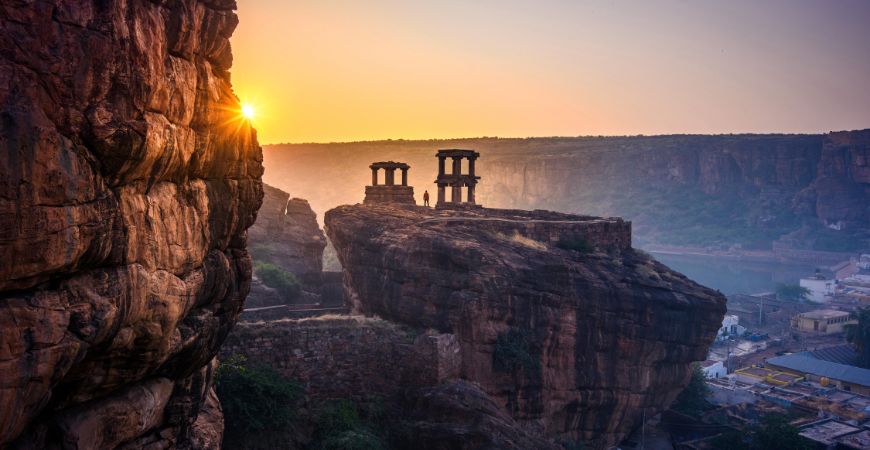
Badami Cave Temples
These stunning rock-cut temples, dating back to the 6th century, showcase intricate carvings and are a UNESCO World Heritage Site. They offer a glimpse into ancient Indian architecture and religion
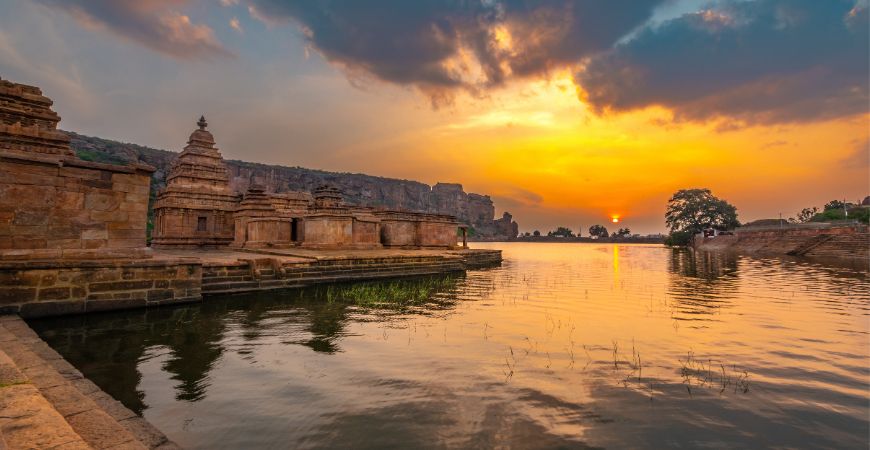
Agastya Lake
Nestled at the foot of the Badami cliffs, this picturesque lake is ideal for leisurely walks and offers a serene environment to relax and take photos
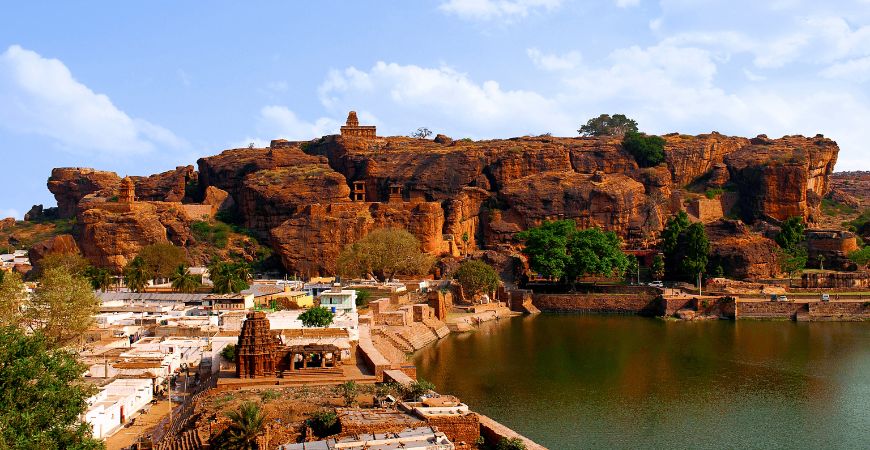
Badami Fort
Perched atop a hill, this fort provides panoramic views of the town and its surrounding landscape. The hike to the top is rewarding and allows for exploration of ancient structures
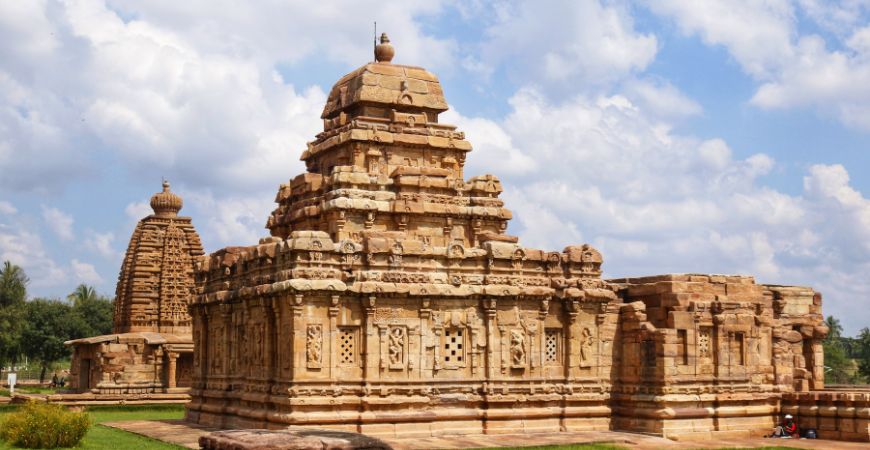
Bhutanatha Temple
Located on the banks of Agastya Lake, this temple is dedicated to Lord Shiva and features beautiful carvings and architecture that reflect the Chalukyan style
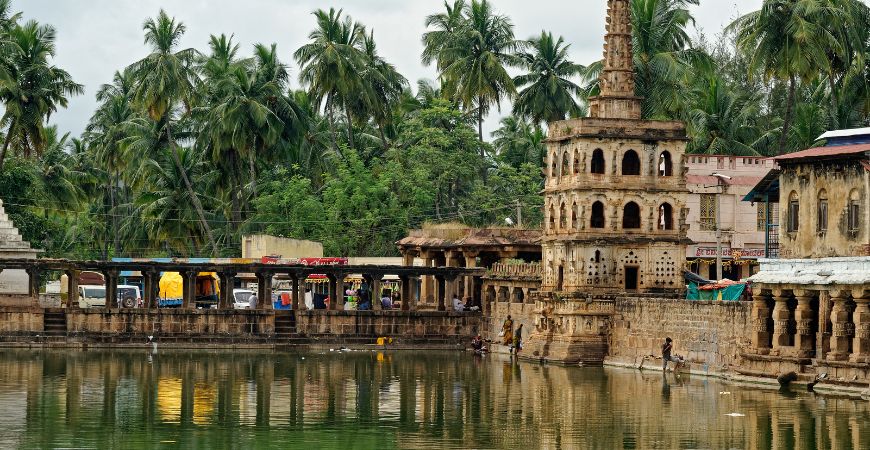
Banashankari Temple
This ancient temple, dedicated to the goddess Banashankari, is known for its beautiful architecture and tranquil atmosphere, making it a perfect spot for spiritual seekers
Aihole
Just a short drive from Badami, Aihole is known as the cradle of Indian temple architecture, with over 100 ancient temples to explore
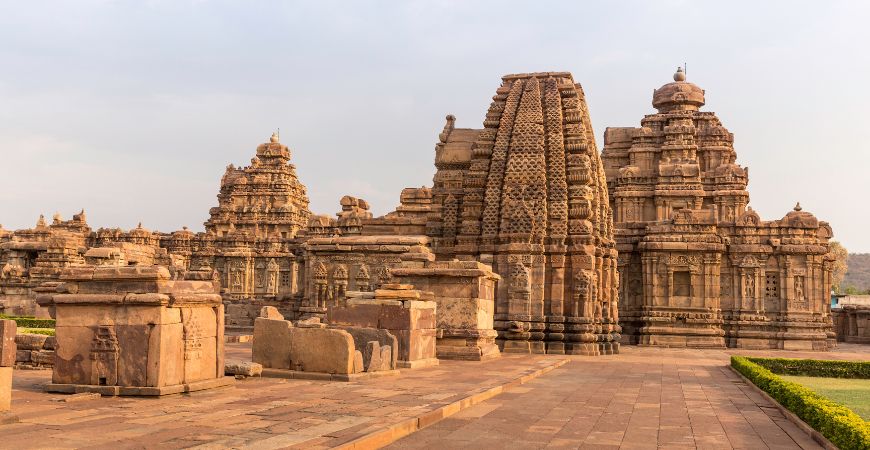
Pattadakal
A UNESCO World Heritage Site, Pattadakal features a stunning collection of temples built in various architectural styles, representing the artistic brilliance of the Chalukyas
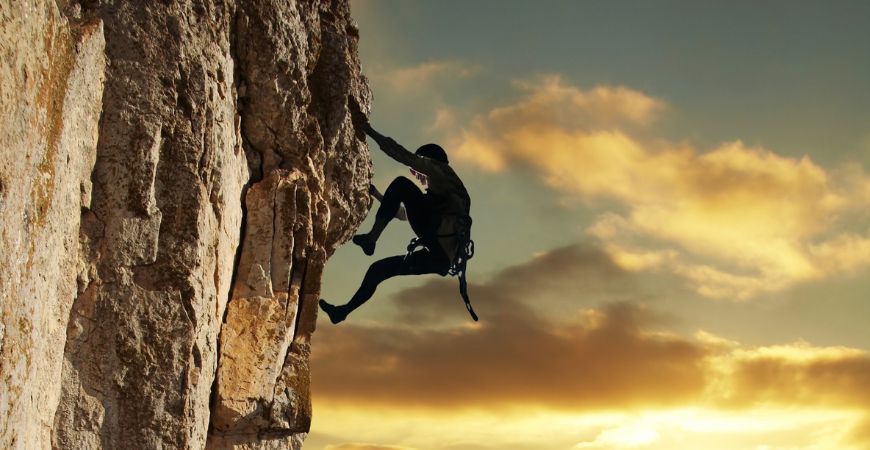
Rock Climbing
Badami is world-renowned as a rock-climbing haven. Offering varying difficulties of climbs and trails – the sandstone cliffs lend themselves beautifully to all kinds of climbers and climbing enthusiasts and is favoured as one of the best destinations for rock-climbing by people from across the world.