
Best Places to Visit in Kanha for Tiger Safaris, Barasingha and Wildlife | Sterling Resorts

HOME {{tab1Name}} {{expResortData.masterName}}

{{keyValues.title}}

{{keyValues.altThumbnailImage}}

Experiences

Rooms

Classic Room Image Classic Room Image

{{obj.roomTypeForNonMember}}

{{obj.voroomtypeformember}}

{{obj.voRoomTypeTimeShareMember}}

{{obj.roomDescription}}

{{obj.voRoomDescription}}

Kanha Travel Experiences Through Tiger Safaris and the Barasingha's Comeback

Few conservation stories in India read as well as the one still playing out across these sal forests. The hard ground Barasingha, a swamp deer found nowhere else in its subspecies, was pulled back from near extinction here through decades of careful breeding, and today it grazes openly across Kanha's meadows most mornings. That comeback sits at the heart of most things to do in Kanha, alongside a tiger population dense enough to have earned the park the nickname Tiger Country. Spread across the Maikal hills of the Satpuras, this expansive tiger reserve rewards patience more than speed, whether that means a slow jeep safari or an early start for sunrise light. Places to visit in Kanha extend beyond the core zones too, taking in a sunset plateau, a small forest museum and buffer trails suited to a gentler pace.

Kisli zone, dense with sal trees, delivers some of the park's steadiest tiger and leopard sightings, while Mukki zone sits further out and is generally rated the strongest bet for a tiger crossing the track, at the cost of a longer drive. Sarhi zone trades big cat odds for a quieter drive and stronger birdlife, useful on a second or third safari. Every evening, jeeps converge on Bamni Dadar, the park's highest point, for a sunset over the sal canopy that regularly counts among visitors' favourite parts of the trip. The small Kanha Museum near Khatia gate fills in the park's history and the Barasingha's recovery story in about the time it takes to finish a cup of tea. Back at the resort, an E-bicycle safari through the buffer forest offers a quieter, slower way to spot wildlife, and a stop at Ajgar Dadar occasionally turns up pythons sunning themselves along the trail.

What stays with most visitors has less to do with any single sighting and more to do with the forest's particular hush. Sal leaves rustling overhead, a jeep engine cutting out the moment a guide spots pug marks, and the sudden, total silence that follows all add up to something a photograph rarely captures. October through February brings cooler safari mornings, while March through June, hot as it gets, tends to deliver the strongest tiger sightings as animals gather near the last waterholes. The park itself closes for the monsoon each year. Sterling Kanha, an 8.5-acre resort tucked into the village of Mocha and shaded by towering sal trees, keeps the reserve within easy reach, with comfort food served at its own Taste of Jungle restaurant and a natural pool to cool off in after a long safari day.

Things to Do in (Kanha)

Gond Art - Every Piece of Art Tells a Story

Gond Art - Every Piece of Art Tells a Story

If you are an art enthusiast and love painting colours into the mundane shades of life, the experience of Gond art is for you.
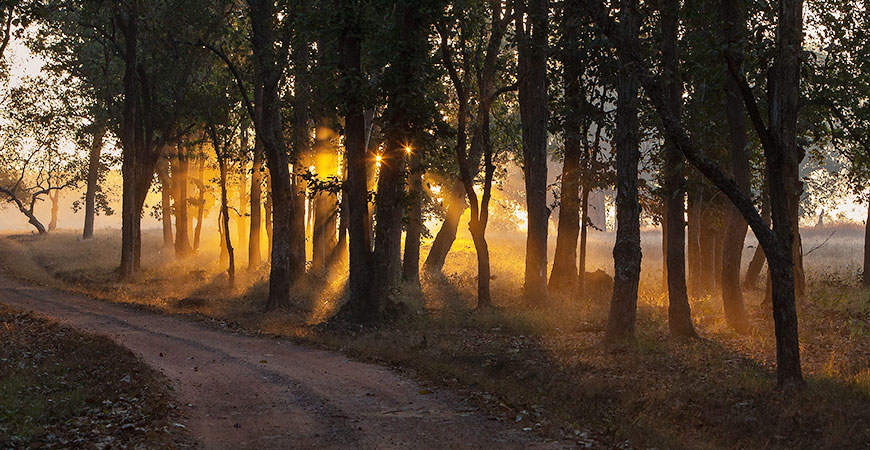
Explore the Wilderness of Kanha on Foot

Explore the Wilderness of Kanha on Foot

Explore the rich biodiveristy by the banks of the Banjar River.

Frequently Asked Questions

Mukki zone is generally rated the strongest bet for a tiger crossing the track, though it sits further from most stays, while Kisli zone offers steadier sightings of both tigers and leopards with an easier approach.
The Barasingha is a hard ground swamp deer that came close to extinction before a dedicated breeding programme at Kanha brought the species back, earning it the nickname the Jewel of Kanha and making the park its last natural stronghold.
Bamni Dadar is included as a stop within safari routes rather than visited separately, and its sunset views over the sal canopy from the park's highest point are considered one of the highlights of an evening drive
The Kanha Museum sits near Khatia gate and can generally be visited alongside a safari booking, offering a quick look at the park's history and the Barasingha's conservation story before or after a jeep ride.
An E-bicycle safari runs through the buffer forest rather than the core zone, offering a quieter, slower way to spot birds and smaller wildlife compared to the faster pace and deeper access of a jeep safari.
Sightings at Ajgar Dadar are not guaranteed, since pythons move and rest according to weather and season, but the spot is known locally for occasional sightings along the trail.
Yes, jeep safari permits are issued online through the Madhya Pradesh forest department and can be booked well ahead, which is worth doing during the busier October to February season.
No, the park closes annually for the monsoon season, reopening once the tracks dry out enough for safaris to resume, so travellers should plan safari trips outside that closure window.
A jeep safari carries up to six guests with a driver and guide for a closer, more flexible drive, while a canter is a larger open bus available at some gates on a first come basis rather than advance booking.
March to June tends to bring the strongest tiger sightings, as the heat concentrates wildlife around the park's remaining waterholes, while October to February offers cooler, more comfortable safari conditions.
Yes, night safaris are among the activities offered through Sterling Kanha, giving guests a chance to spot nocturnal wildlife that rarely appears on a standard daytime drive.
Sterling Kanha's restaurant serves comfort food alongside Indian and international dishes, with local specialities like Aloo Dal Badi and Urad Daal Ki Subji among the standout choices.
Two to three safaris across different zones give a reasonable chance of a tiger sighting, with many visitors combining a Kisli or Mukki drive with a quieter Sarhi route for variety.
Kanha is home to over 300 recorded bird species, including the Indian Roller, golden oriole and several owl species, making it a strong destination for birding alongside its big cat safaris.
Kanha's sal forests are often cited, alongside neighbouring Pench, as part of the landscape that shaped the setting of The Jungle Book, though Kipling based his writing on accounts rather than a personal visit.
The resort offers bird watching, trekking, cycling, a natural swimming pool and a Sunset Point visit, along with indoor and outdoor games at its Holiday Activity Centre.